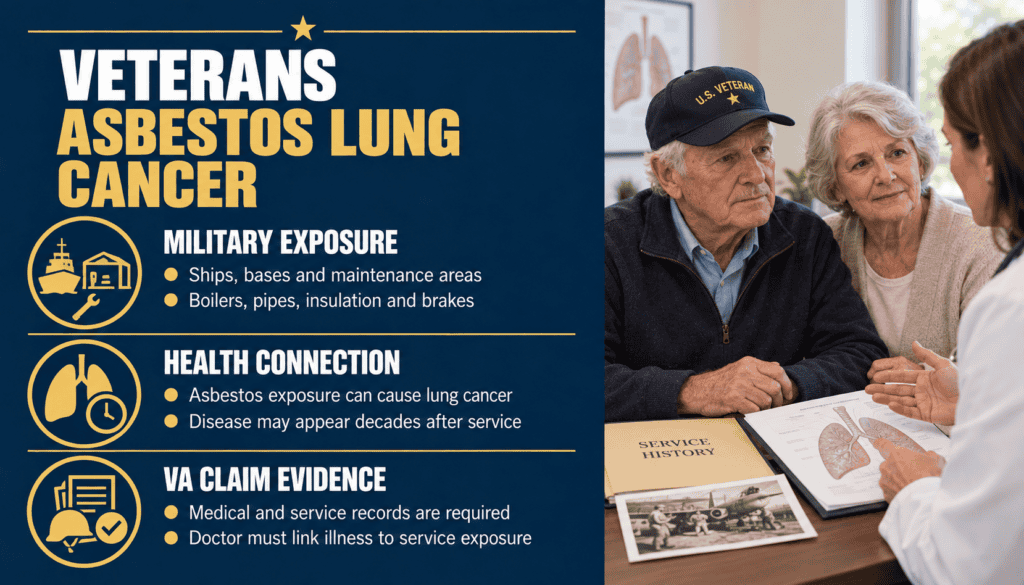
Veterans Asbestos Lung Cancer
U.S. military veterans may develop lung cancer decades after asbestos exposure during service. Historically, asbestos-containing materials were used in many military ships, facilities, mechanical systems, vehicles, construction materials, insulation systems, and equipment because of their heat resistance and fire-protection properties.
Military service alone does not prove asbestos exposure, and asbestos exposure alone does not prove that asbestos caused an individual veteran’s lung cancer. A credible investigation looks at the veteran’s branch, service dates, military occupation, ships, bases, duty stations, equipment, maintenance work, construction assignments, and other specific exposure circumstances.
This page is the Veterans Asbestos Lung Cancer hub within the broader Diagnosed With Lung Cancer silo. It connects veteran exposure history with lung cancer risk, diagnosis, treatment, legal claims, asbestos trust funds, and possible veterans benefits.
🎖️ Military Asbestos Exposure and Lung Cancer
Asbestos was historically valued by the military for insulation, heat resistance, fire protection, durability, and use around high-temperature equipment. Depending on branch, era, location, and assignment, service members could potentially encounter asbestos-containing materials during construction, maintenance, repair, overhaul, demolition, or routine work around older systems.
When asbestos-containing material is cut, removed, scraped, drilled, repaired, deteriorated, or otherwise disturbed, microscopic fibers can become airborne and be inhaled. Asbestos is an established cause of lung cancer.
Not every military building, ship, vehicle, aircraft, machine, or component contained asbestos. Material composition varied by manufacturer, model, component, installation date, military specification, and location. Exposure should therefore be investigated from specific evidence rather than assumed from military service alone.
For more information about the disease risk itself, see Asbestos Lung Cancer Risk.
⚠️ Veterans Who May Have Faced Greater Asbestos Exposure
Potential exposure varied substantially by military job and work environment. Personnel whose duties involved heat-producing machinery, steam systems, insulation, construction, demolition, vehicle repair, ship maintenance, or older facilities may warrant particularly careful review.
| Military Work Setting | Possible Exposure Pathway | Evidence to Review |
|---|---|---|
| Shipboard engineering spaces | Work around insulated piping, boilers, pumps, valves, turbines, gaskets, or packing | Ship assignments, ratings, maintenance records, overhaul records |
| Base construction and renovation | Disturbing certain older insulation, flooring, roofing, fireproofing, cement, or mechanical systems | Unit records, project records, building specifications, duty history |
| Vehicle and equipment maintenance | Historical work involving certain brakes, clutches, gaskets, insulation, or heat-resistant components | Equipment models, parts records, maintenance duties, witness statements |
| Boiler and utility work | Repair around high-temperature piping, boilers, furnaces, valves, pumps, and insulation | Occupational specialty, work orders, facility records |
| Aircraft maintenance and facilities | Potential contact with certain heat-resistant components or older building materials | Aircraft type, maintenance specialty, hangar and facility records |
⚓ Ships, Bases, Facilities, and Military Equipment
For some veterans, the key to reconstructing exposure is identifying the specific environment where work occurred. Relevant settings can include ships, shipyards, barracks, hangars, boiler rooms, power facilities, maintenance shops, warehouses, training facilities, base housing, construction sites, and other military installations.
Potentially relevant materials or components can include certain historical thermal insulation, pipe covering, boiler insulation, gaskets, packing, fireproofing, cement materials, floor tile, roofing, brake components, clutch components, and other heat-resistant products.
The correct question is not whether asbestos was generally associated with the military. The investigation should determine whether a particular veteran actually worked around asbestos-containing materials during the years and assignments at issue.
🛠️ Military Jobs and Duties to Investigate
Some military occupations created more opportunities for direct or bystander exposure than others. The following types of work may warrant investigation when they were performed during eras in which asbestos-containing materials were present:
- Engineering and boiler-room work
- Pipefitting and plumbing
- Ship repair and overhaul
- Electrical work
- Mechanical and vehicle maintenance
- Aircraft maintenance
- Construction and demolition
- Insulation work
- Power generation and utility maintenance
- Firefighting and damage-control work
Bystander exposure may also have occurred when another trade disturbed asbestos-containing material nearby, especially in enclosed spaces. Proximity, frequency, duration, ventilation, and the actual material involved all matter.
⏳ Latency and Lung Cancer Diagnosis After Military Service
Asbestos-related lung cancer can develop after a long latency period. A veteran may therefore receive a diagnosis decades after leaving active duty.
That long interval can make exposure difficult to recognize. A veteran may have served aboard a ship or at a military installation early in adulthood and not develop lung cancer until retirement.
Veterans diagnosed with lung cancer should tell their healthcare providers about significant military and occupational asbestos exposure even when it occurred many years earlier.
Diagnosis itself requires medical evaluation, imaging, and usually tissue or cell testing. For more detail, see Diagnosing Asbestos-Related Lung Cancer.
📁 How Veterans Can Document Asbestos Exposure
Veterans do not always remember the names of products they encountered during service. Exposure can sometimes be reconstructed through military and historical records.
| Evidence | What It May Help Establish |
|---|---|
| Military personnel records | Branch, service dates, occupation, units, and assignments |
| Ship or duty-station records | Where the veteran served and the facilities or vessels involved |
| Maintenance records | Equipment, repairs, overhauls, and work performed |
| Military occupational specialty or rating | Typical duties and technical responsibilities |
| Coworker or shipmate testimony | Work practices, dust conditions, materials, and equipment |
| Historical product and equipment records | Whether asbestos-containing components were used during the relevant period |
| Medical records | Lung cancer diagnosis and relevant clinical history |
A strong exposure history identifies the veteran’s specific tasks, years, locations, and materials rather than relying solely on broad assumptions about military asbestos use.
🩺 Treatment and Prognosis for Veterans With Asbestos Lung Cancer
Veterans with asbestos-related lung cancer are treated according to the same major medical factors used for other lung cancers: whether the cancer is non-small cell or small cell, stage, tumor location, molecular and biomarker findings, lung function, previous treatment, and overall health.
Potential treatments can include surgery, chemotherapy, immunotherapy, radiation therapy, targeted therapy, supportive care, or combinations of these approaches.
Asbestos exposure does not create a separate universal treatment protocol or survival rate. Other asbestos-related conditions such as asbestosis or pleural disease may, however, affect lung function and treatment planning.
See the Asbestos Lung Cancer Treatment hub and Asbestos Lung Cancer Prognosis & Survival for more information.
⚖️ VA Benefits and Legal Claims for Veterans
Veterans diagnosed with lung cancer after service-related asbestos exposure may be able to investigate VA disability benefits depending on service connection and current eligibility rules. Veterans may also have separate legal claims against asbestos product manufacturers, suppliers, contractors, bankruptcy trusts, or other legally responsible parties.
These are different systems. A VA claim does not automatically establish a civil lawsuit, and a lawsuit does not automatically establish VA eligibility.
| Potential Path | What Generally Must Be Investigated |
|---|---|
| VA disability benefits | Veteran status, current disability, service connection, medical evidence, and VA eligibility rules |
| Asbestos lawsuit | Diagnosis, exposure, responsible defendants, causation, jurisdiction, and deadline |
| Asbestos trust claim | Trust-specific medical and exposure requirements |
| Wrongful death claim | Eligible claimant, diagnosis, exposure, responsible parties, damages, and filing deadline |
Veterans can review the Asbestos Lung Cancer Lawsuits & Compensation hub, Asbestos Lung Cancer Lawsuits, Asbestos Lung Cancer Trust Fund Claims, and Who Qualifies for Asbestos Lung Cancer Compensation?.
Veteran diagnosed with lung cancer after possible asbestos exposure? Call 800.291.0963 or Submit Your Case. Live help is available 24/7, 365 days a year.
🏠 Military Family Secondhand Asbestos Exposure
Some military families may also have experienced secondhand asbestos exposure when fibers were carried away from work areas on clothing, footwear, tools, or other items.
A family member’s exposure should not be assumed merely because a veteran worked in an asbestos-associated occupation. A credible investigation considers whether the veteran’s actual duties created contaminated dust and whether there was a plausible pathway into the home.
Evidence may include the veteran’s occupation, work practices, laundering routines, family testimony, military housing history, and product or worksite evidence.
Family claims are highly fact-specific and depend on the applicable law, exposure evidence, diagnosis, responsible parties, and filing deadlines.
❓ Frequently Asked Questions
Can veterans develop lung cancer from asbestos exposure?
Yes. Asbestos is an established cause of lung cancer. Whether asbestos contributed to a particular veteran’s cancer depends on the actual exposure history and other risk factors.
Which veterans had the greatest asbestos exposure risk?
Risk varied by branch, era, assignment, and job. Personnel involved in ship repair, engineering, boiler and pipe work, construction, insulation, mechanical maintenance, utilities, and certain equipment work may warrant closer exposure review.
How long after military asbestos exposure can lung cancer develop?
Asbestos-related lung cancer can develop after a latency period measured in decades, so service from many years earlier can remain relevant.
Does smoking prevent a veteran from having an asbestos-related claim?
Not automatically. Smoking and asbestos are separate established lung cancer risk factors. The effect of both histories depends on medical evidence, exposure facts, and the rules governing the claim.
Can veterans file asbestos trust fund claims?
Potentially. If military or other exposure can be connected to products or operations associated with an asbestos bankruptcy trust, the veteran may be able to file a claim if the trust’s medical and exposure criteria are met.
Can veterans pursue both VA benefits and legal compensation?
Potentially. VA benefits, asbestos lawsuits, and bankruptcy trust claims are separate systems. Eligibility and interactions should be evaluated individually.
What records help prove military asbestos exposure?
Service records, occupational specialty or rating, ship and base assignments, maintenance records, equipment documentation, historical product evidence, and statements from coworkers or shipmates may help reconstruct exposure.
Can a veteran’s spouse or family member have a secondhand asbestos claim?
Possibly. A claim requires evidence of a plausible household exposure pathway, a qualifying diagnosis, legally relevant asbestos sources, and compliance with applicable law and filing deadlines.
📞 Veteran Diagnosed With Lung Cancer After Military Asbestos Exposure?
If you or a family member served in the U.S. military and later developed lung cancer, an exposure review can examine branch, service dates, ships, bases, occupations, maintenance duties, equipment, construction work, and civilian employment before or after service.
Call 800.291.0963 to discuss the veteran’s service and possible asbestos exposure. Live help is available 24/7, 365 days a year.
Submit Your Case for a case-specific review of possible asbestos lawsuits, trust fund claims, and other legal options. Eligibility for legal compensation or VA benefits depends on the evidence and applicable rules.
⚕️ Legal & Medical Information Disclaimer
This page provides general educational information only. It does not establish diagnosis, medical causation, legal liability, VA eligibility, or entitlement to compensation. Consult qualified medical and legal professionals about your specific situation.