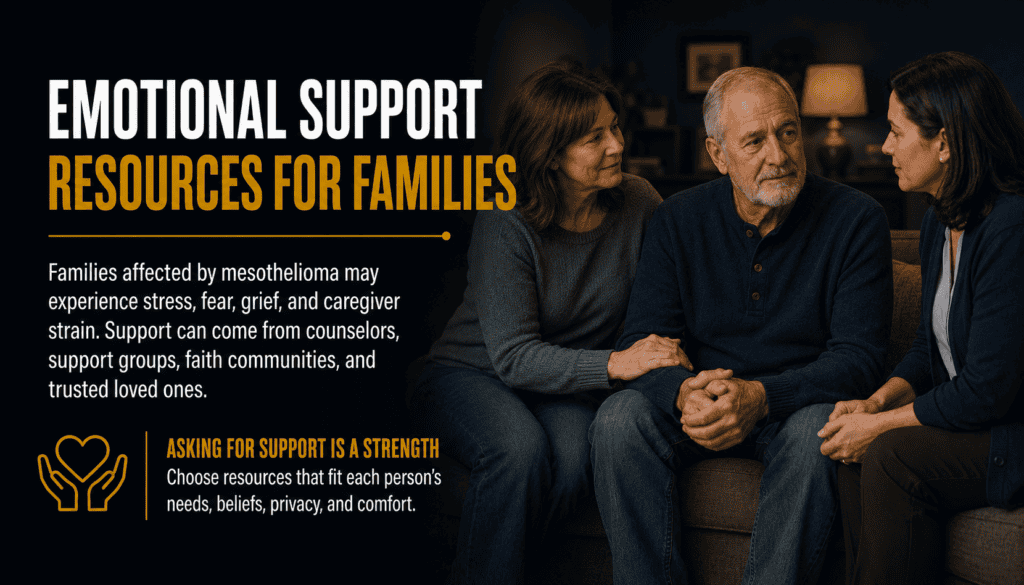
Emotional Support Resources for Families
Counseling, peer connections and practical support for families facing mesothelioma.
Families coping with mesothelioma may need emotional care alongside help with appointments, household responsibilities and difficult decisions. This guide explains where to begin, how to find support suited to each person and when to seek professional assistance.
Why Families Need Emotional Support
A mesothelioma diagnosis can change schedules, roles and expectations for the whole household. Relatives may feel fear, anger, sadness, uncertainty or exhaustion, sometimes at the same time. These responses vary; no family member has to feel a particular way. Emotional support means making room for feelings while arranging concrete help, not requiring everyone to stay positive.
| Family member | Possible concern | Useful first step |
|---|---|---|
| Patient | Fear about treatment and loss of independence | Ask what support they want and preserve choices |
| Partner | Caregiving and financial strain | Identify a backup caregiver and a confidential person to talk to |
| Children | Uncertainty and changes at home | Give honest, age-appropriate explanations |
| Distant relatives | Feeling excluded or helpless | Assign a specific remote task and update schedule |
Start Conversations Without Pressuring Anyone
Ask permission before discussing difficult topics: “Would you like to talk, or would you prefer company without talking?” Listen without immediately correcting feelings or offering reassurance that cannot be guaranteed. The patient may choose who receives medical updates. For help coordinating conversations, read the family medical advocate guide.
| Try saying | Why it may help |
|---|---|
| What feels hardest today? | Invites the person to identify a priority |
| Would you like me to listen or help solve something? | Clarifies the kind of support wanted |
| I can drive you Tuesday or arrange dinner Thursday. | Offers concrete choices |
| I do not know, but we can ask the care team. | Avoids false reassurance |
Find Counseling and Oncology Social Work
An oncology social worker can help identify counseling, transportation, financial aid and family resources. Psychologists, licensed counselors, psychiatrists and palliative-care teams may help with distress depending on individual needs and availability. Ask the oncology clinic for a referral and verify insurance coverage, telehealth options and appointment availability. See mesothelioma and mental health for related guidance.
| Resource | What it can help with | Question to ask |
|---|---|---|
| Oncology social worker | Family distress and practical service referrals | Can you see caregivers as well as patients? |
| Licensed therapist | Persistent anxiety, sadness or relationship strain | Do you work with serious illness and grief? |
| Palliative-care team | Symptoms, care goals and family support | Can we receive support alongside cancer treatment? |
| Insurance care navigator | Covered providers and referral rules | Which mental health visits are covered? |
Choose Support Groups and Online Communities
Peer groups can provide connection and practical experiences, but another person’s medical outcome does not predict yours. Ask whether a group is moderated, whether caregivers can attend, how confidentiality works and whether participation is free. Avoid sharing identifying health records or financial details in public forums. Explore mesothelioma support groups and using support groups and online communities.
| Format | Potential benefit | Consideration |
|---|---|---|
| In-person group | Local connection | Transportation, accessibility and infection precautions |
| Virtual video group | Join from home | Privacy and technology needs |
| Telephone group | No video required | Meeting times and confidentiality |
| Caregiver-only group | Space to discuss caregiver stress | Check eligibility and moderation |
Support Children and Teenagers
Children notice changes even when adults avoid discussing them. Use simple, truthful language suited to age and development, explain what will happen next when known, and make clear that the illness is not the child’s fault. Invite questions over time without requiring a conversation on demand. Tell school counselors about the situation with appropriate family consent. Read communicating with children about terminal illness for more age-specific guidance.
| Age or situation | Support approach | Watch for |
|---|---|---|
| Young children | Short explanations and predictable routines | New fears or persistent changes in sleep |
| School-age children | Invite questions and name trusted adults | School avoidance or persistent withdrawal |
| Teenagers | Respect privacy and offer independent support | Isolation or major changes in functioning |
| Any age | Keep information consistent and age appropriate | Distress that persists or disrupts daily life |
Protect Caregivers From Isolation and Overload
Caregivers may postpone their own meals, sleep, appointments and relationships. Assign tasks by person, date and backup rather than relying on open-ended offers. Schedule respite before exhaustion becomes a safety concern. A caregiver can seek counseling independently. Use burnout prevention, caregiver mental health guidance and a shared support calendar to build a manageable plan.
| Pressure | Practical adjustment | Who can help |
|---|---|---|
| No uninterrupted time off | Schedule a defined relief shift | Trusted family member or qualified aide |
| Too many status updates | Designate one agreed-upon contact | Family communications volunteer |
| Overlapping appointments | Use one shared calendar | Care coordinator or relative |
| Bills and paperwork | Request social-work and benefits guidance | Social worker or authorized financial helper |
Recognize When More Help Is Needed
If distress is persistent, worsening, or interferes with sleep, safety or daily activities, contact a healthcare or mental health professional. A person who expresses suicidal thoughts deserves immediate, compassionate attention. In the United States, call or text 988 for suicide or mental health crisis support; call 911 for immediate danger or a medical emergency. If the patient develops new severe breathing difficulty, severe chest pain or becomes unresponsive, seek emergency medical care. For more, see anxiety and depression with mesothelioma.
| Situation | Action |
|---|---|
| Ongoing sadness or anxiety affecting daily life | Ask a clinician for assessment and support |
| Caregiver can no longer provide safe care | Contact care team and arrange appropriate coverage |
| Suicidal thoughts or mental health crisis in the U.S. | Call or text 988; use 911 if danger is immediate |
| Severe medical symptoms or immediate danger | Call emergency services |
Create a Seven-Day Family Support Plan
Start with small steps and revisit the plan after appointments or changes in care needs. Ask the patient for consent before sharing medical details, and make sure someone knows how to reach the clinical team. If grief is already part of the family’s experience, bereavement resources and emotional healing after loss offer additional guidance.
| Day | Action | Person responsible |
|---|---|---|
| 1 | Ask each person what support they want | Patient and family |
| 2 | Request oncology social-work contact | Designated caller |
| 3 | Choose one trusted support person or group | Each willing family member |
| 4 | Set up appointment and task calendar | Family coordinator |
| 5 | Arrange one caregiver break | Backup helper |
| 6 | Check in with children and school support if needed | Parent or guardian |
| 7 | Review gaps, privacy and next week’s needs | Family with patient input |
Frequently Asked Questions
Is it normal for family members to react differently?
Yes. People may respond with sadness, fear, anger, numbness or a wish for practical tasks. Avoid requiring the same response from everyone.
Can family members seek counseling if the patient does not want it?
Yes. Relatives can ask their own clinicians, insurers or oncology social workers about caregiver and family counseling options.
Are support groups a substitute for therapy?
No. Groups offer peer connection; persistent or severe symptoms warrant assessment by a qualified professional.
How do we help someone who does not want to talk?
Respect their preference, offer companionship or a specific task, and revisit gently later rather than pressing for disclosure.
What should we tell children?
Give truthful, age-appropriate information, explain immediate changes, invite questions and avoid promises about outcomes.
How can distant relatives help?
They can manage scheduling, order groceries with permission, make approved calls or cover specific costs if appropriate.
Can palliative care help families before hospice?
Yes. Palliative care may provide symptom and family support alongside disease-directed treatment; availability varies.
When should we seek urgent mental health help?
For a U.S. mental health crisis, call or text 988. Call 911 for immediate danger or a medical emergency.
Authoritative Emotional Support Resources
Confirm current services, hours and eligibility directly with each organization.
Get Support for Your Family
Call 800.291.0963. Live chat is available 24/7, 365 days a year. Submit Your Case using the form below. Contacting us does not guarantee compensation or services.
⚕️ Legal & Medical Information Disclaimer
This article provides general information, not individualized medical, mental health or legal advice. Consult qualified professionals for your situation. For immediate danger, call emergency services.