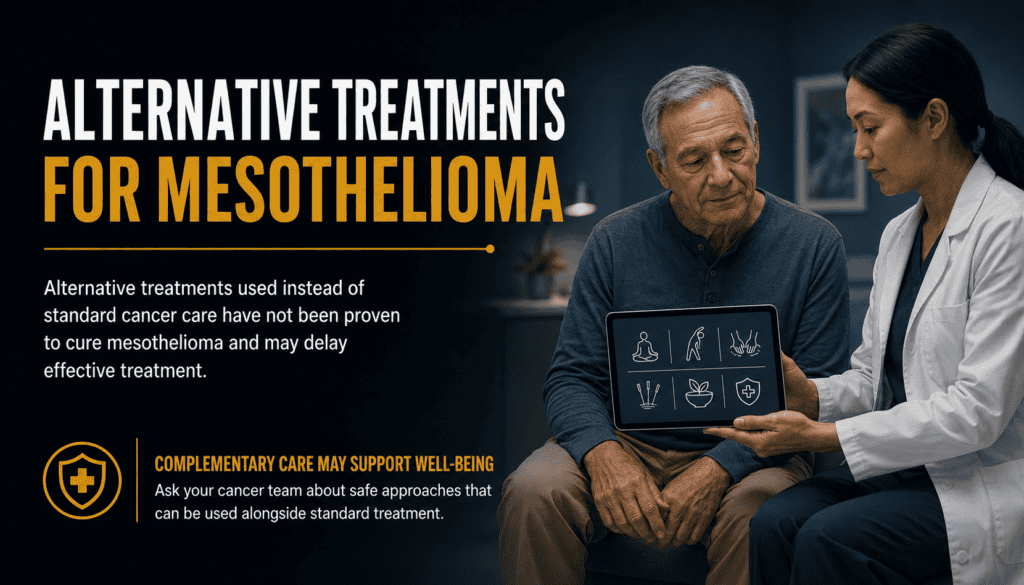
Alternative Treatments for Mesothelioma
People diagnosed with mesothelioma may explore alternative or complementary treatments to manage pain, fatigue, anxiety, nausea, breathing difficulties, and other symptoms.
Some supportive therapies may improve comfort or quality of life when used alongside standard medical care. However, no alternative treatment has been proven to cure mesothelioma or replace evidence-based treatments such as surgery, chemotherapy, immunotherapy, radiation therapy, targeted therapy, or clinical trials.
The safest approach is usually integrative care—combining appropriate complementary therapies with treatment supervised by a qualified mesothelioma specialist.
This page explains:
- The difference between complementary and alternative treatments
- Which supportive therapies may help mesothelioma patients
- Possible benefits and risks
- Supplement and medication interactions
- How to evaluate treatment claims
- Questions to ask a doctor
- How integrative care fits into a mesothelioma treatment plan
What Are Alternative Mesothelioma Treatments?
Alternative treatments are medical products, practices, or systems used instead of standard cancer treatment.
Examples may include:
- Herbal remedies
- Dietary supplements
- Special diets
- High-dose vitamins
- Acupuncture
- Massage
- Meditation
- Yoga
- Energy-based practices
- Traditional healing systems
- Unproven cancer remedies
The National Cancer Institute defines complementary and alternative medicine as products and practices that are not part of standard medical care. The distinction depends on how they are used: a therapy used with standard care is complementary, while one used in place of standard care is alternative.
This difference is important.
Using meditation alongside chemotherapy to reduce stress is a complementary approach. Rejecting recommended chemotherapy in favor of an unproven herbal product is an alternative approach that may allow the cancer to progress.
Complementary, Alternative, and Integrative Medicine
These terms are related but do not mean exactly the same thing.
Complementary Treatment
A complementary treatment is used alongside conventional medical care.
Examples include:
- Acupuncture for nausea
- Massage for muscle tension
- Meditation for anxiety
- Gentle exercise for fatigue
- Nutrition counseling during treatment
- Music therapy for emotional support
Complementary treatments are generally intended to manage symptoms, treatment side effects, emotional stress, or overall well-being.
Alternative Treatment
An alternative treatment is used instead of established medical care.
Examples may include:
- Replacing chemotherapy with supplements
- Delaying surgery while following an unproven diet
- Using detoxification products as a cancer cure
- Refusing oncology care in favor of energy healing alone
This approach can be dangerous because mesothelioma may continue growing while effective treatment is delayed.
Integrative Medicine
Integrative medicine combines conventional treatment with carefully selected complementary therapies.
An integrative care plan may include:
- Oncology treatment
- Palliative care
- Nutrition support
- Acupuncture
- Counseling
- Physical activity
- Massage
- Meditation
- Spiritual support
Integrative care should be coordinated with the patient’s oncology team so that therapies do not interfere with treatment.
Can Alternative Treatments Cure Mesothelioma?
No alternative therapy has been proven to cure mesothelioma.
Standard mesothelioma treatment may include:
- Surgery
- Chemotherapy
- Immunotherapy
- Radiation therapy
- Targeted therapy
- Clinical trials
- Palliative procedures
The National Cancer Institute lists these evidence-based approaches among the treatments currently used for mesothelioma.
Some complementary treatments may help relieve symptoms or improve quality of life, but they should not be presented as treatments that eliminate mesothelioma tumors.
Patients should be cautious of anyone who claims to have:
- A guaranteed cure
- A secret treatment doctors are hiding
- One remedy that works for every cancer
- A treatment requiring the patient to stop oncology care
- A product that supposedly removes all toxins
- A cure supported only by testimonials
- A therapy available only after a large advance payment
Cancer treatment decisions should be based on reliable medical evidence and consultation with qualified specialists.
Why Mesothelioma Patients Consider Complementary Therapies
Patients may explore complementary care for many reasons.
They may want to:
- Reduce pain
- Control nausea
- Sleep better
- Improve appetite
- Manage fatigue
- Reduce anxiety
- Maintain strength
- Feel more involved in their care
- Improve emotional well-being
- Cope with uncertainty
- Reduce muscle tension
- Receive spiritual support
These goals are reasonable.
The key question is not simply whether a therapy is described as natural or alternative. The important questions are whether it is safe, whether there is evidence that it helps, and whether it could interfere with cancer treatment.
Acupuncture for Mesothelioma Symptoms
Acupuncture involves inserting very thin needles into specific points on the body.
Cancer patients may use acupuncture to help manage:
- Nausea
- Vomiting
- Pain
- Anxiety
- Dry mouth
- Neuropathy
- Sleep problems
- Treatment-related discomfort
The National Cancer Institute recognizes acupuncture as a complementary therapy that may be used with standard treatment to help reduce certain symptoms, including cancer pain and nausea.
Acupuncture should be performed by a properly trained and licensed practitioner using sterile, single-use needles.
Acupuncture Safety Concerns
Acupuncture may not be appropriate for every patient.
Patients should speak with their oncology team before treatment if they have:
- Low platelet counts
- A weakened immune system
- Active infection
- Lymphedema
- Blood-clotting problems
- Recent surgery
- An implanted medical device
- Significant skin damage
Needles should not be placed through tumors, surgical wounds, infected skin, or areas affected by radiation without medical approval.
Massage Therapy
Massage may help reduce:
- Muscle tension
- Stress
- Anxiety
- General discomfort
- Sleep difficulties
- Feelings of isolation
Massage does not treat the mesothelioma tumor itself. Its purpose is usually relaxation and symptom support.
A massage therapist working with a cancer patient should have experience in oncology massage.
When Massage Should Be Modified
Deep pressure may be unsafe around:
- Surgical incisions
- Radiation-treated skin
- Tumor sites
- Pleural catheters
- Ports
- Blood clots
- Bone metastases
- Fragile skin
- Swollen areas
- Sites of infection
Patients taking blood-thinning medication or experiencing low platelet counts may need a gentler approach.
The medical team should approve massage after major surgery or during periods of increased bleeding risk.
Meditation and Mindfulness
Meditation focuses attention and encourages calm awareness.
Mindfulness teaches people to observe thoughts, emotions, and physical sensations without immediately reacting to them.
These practices may help patients manage:
- Anxiety
- Emotional stress
- Sleep difficulties
- Fear of treatment
- Pain-related distress
- Feelings of helplessness
Meditation can be practiced:
- Individually
- With a counselor
- Through a cancer-center program
- In a support group
- Through guided audio
- During breathing exercises
Meditation does not remove cancer, but it may help patients feel more emotionally grounded during treatment.
Breathing and Relaxation Exercises
Pleural mesothelioma may cause shortness of breath, chest tightness, or anxiety related to breathing.
Simple relaxation practices may include:
- Slow breathing
- Pursed-lip breathing
- Guided imagery
- Progressive muscle relaxation
- Gentle visualization
- Supported positioning
These exercises may help reduce anxiety and make breathing feel more controlled.
They do not replace medical treatment for pleural fluid, infection, pulmonary embolism, low oxygen, or tumor-related breathing problems.
Sudden, severe, or worsening shortness of breath requires immediate medical attention.
Yoga, Tai Chi, and Gentle Movement
Gentle movement may help some patients maintain:
- Flexibility
- Balance
- Strength
- Mobility
- Confidence
- Sleep quality
- Emotional well-being
Appropriate activities may include:
- Chair yoga
- Restorative yoga
- Gentle stretching
- Tai chi
- Short walks
- Supervised rehabilitation exercises
Patients recovering from surgery or experiencing severe breathing limitations should ask their medical team before beginning an exercise program.
Movements may need to be modified for:
- Chest or abdominal surgery
- Pleural catheters
- Oxygen equipment
- Balance problems
- Weakness
- Neuropathy
- Bone disease
- Cardiovascular conditions
Exercise should be stopped if it causes chest pain, dizziness, severe breathlessness, or unusual weakness.
Physical Therapy and Pulmonary Rehabilitation
Physical therapy and pulmonary rehabilitation are generally considered supportive medical care rather than alternative treatment.
They may help patients:
- Rebuild strength after surgery
- Improve walking tolerance
- Learn energy-conservation techniques
- Use breathing muscles more efficiently
- Reduce fall risk
- Adapt daily activities
- Maintain independence
A pulmonary rehabilitation program may include:
- Supervised exercise
- Breathing instruction
- Oxygen education
- Nutrition support
- Symptom monitoring
- Energy-conservation training
These programs should be tailored to the patient’s stage of disease, treatment history, oxygen needs, and overall health.
Nutrition Therapy
Mesothelioma and its treatments may affect appetite, taste, digestion, swallowing, and body weight.
An oncology dietitian can help patients develop a plan that supports:
- Adequate calories
- Protein intake
- Hydration
- Muscle maintenance
- Recovery after surgery
- Management of nausea
- Bowel regularity
- Food safety
Helpful strategies may include:
- Eating smaller meals more frequently
- Choosing calorie-dense foods
- Including protein at each meal
- Using prescribed nutritional drinks
- Eating when appetite is strongest
- Managing nausea before meals
- Keeping easy-to-prepare foods available
Nutrition therapy should focus on supporting the body during treatment rather than following restrictive diets that may worsen weight loss.
Special Cancer Diets
Many diets are promoted online as cancer treatments.
Examples may include:
- Ketogenic diets
- Alkaline diets
- Raw-food diets
- Juice-only diets
- Macrobiotic diets
- Extreme fasting
- Sugar-free cancer diets
- Detoxification diets
No special diet has been proven to cure mesothelioma.
Highly restrictive diets may lead to:
- Weight loss
- Muscle loss
- Nutrient deficiencies
- Weakness
- Poor treatment tolerance
- Dehydration
- Delayed recovery
A diet that may be appropriate for one person could be harmful to another.
Patients should discuss major dietary changes with an oncology dietitian and medical oncologist.
Herbal Products and Dietary Supplements
Herbs, vitamins, minerals, mushrooms, teas, and other supplements are frequently marketed to people with cancer.
Commonly promoted products include:
- Turmeric or curcumin
- Green tea extracts
- Medicinal mushrooms
- Milk thistle
- Garlic supplements
- High-dose vitamin C
- Vitamin D
- Melatonin
- Essiac tea
- CBD products
- Mistletoe extracts
A product being natural does not mean it is automatically safe.
Dietary supplements may:
- Interact with chemotherapy
- Alter immunotherapy effects
- Increase bleeding risk
- Affect anesthesia
- Damage the liver
- Affect kidney function
- Change medication levels
- Interfere with radiation treatment
- Cause allergic reactions
The National Center for Complementary and Integrative Health warns that dietary and herbal supplements can interfere with cancer treatments and recommends discussing every supplement with a healthcare provider.
Supplements That May Increase Bleeding Risk
Some supplements may affect blood clotting.
Examples can include:
- Ginkgo
- Garlic
- Ginseng
- Fish oil in high doses
- Vitamin E in high doses
- Turmeric or curcumin
- Feverfew
- Dong quai
The level of risk depends on the product, dose, patient, and other medications.
This may be especially important before:
- Surgery
- Biopsy
- Thoracentesis
- Pleural catheter placement
- Port placement
- Dental procedures
Patients should provide their treatment team with a complete list of supplements well before any procedure.
Antioxidant Supplements During Treatment
Antioxidants are sometimes promoted as a way to protect the body during chemotherapy or radiation.
However, high-dose antioxidant supplements may affect treatments that rely partly on oxidative damage to cancer cells.
The evidence varies by treatment, dose, and supplement.
Patients should not begin high-dose vitamins or antioxidants without guidance from their oncologist.
This includes:
- Vitamin C
- Vitamin E
- Beta-carotene
- Selenium
- Combination antioxidant products
Ordinary amounts of nutrients consumed through a balanced diet are different from concentrated high-dose supplements.
Intravenous Vitamin C
Intravenous vitamin C delivers much larger concentrations than oral supplements.
Researchers have studied intravenous vitamin C in several cancers, but it has not been proven to cure mesothelioma.
Early research in some cancers has produced findings that warrant further study, but promising preliminary results are not the same as established clinical benefit.
Intravenous vitamin C may create risks for people with:
- Kidney disease
- Kidney stones
- Iron-overload disorders
- Certain enzyme deficiencies
- Dehydration
- Some medication regimens
Patients should not receive intravenous vitamin C without approval from their oncology team and a complete medical evaluation.
Medicinal Mushrooms
Products containing medicinal mushrooms are sometimes promoted for immune support.
Examples may include:
- Reishi
- Turkey tail
- Maitake
- Shiitake extracts
- Cordyceps
Research involving specific mushroom compounds does not prove that commercial supplements cure mesothelioma.
Products may vary in:
- Ingredients
- Concentration
- Purity
- Contamination
- Manufacturing quality
- Biological activity
Some mushroom products may interact with blood thinners, diabetes medication, immune-modulating drugs, or liver metabolism.
Patients receiving immunotherapy should discuss immune-related supplements with their oncologist.
Cannabis and Cannabinoids
Cannabis-derived products may be used by some cancer patients to manage:
- Pain
- Nausea
- Appetite loss
- Sleep problems
- Anxiety
Cannabis does not cure mesothelioma.
Possible side effects include:
- Dizziness
- Drowsiness
- Confusion
- Anxiety
- Impaired coordination
- Low blood pressure
- Medication interactions
Smoking or inhaling cannabis may irritate the respiratory system and may be particularly inappropriate for people with pleural disease or impaired lung function.
Legal access and product regulation vary by state.
Patients should discuss cannabis use with their medical team, especially when taking pain medications, sedatives, blood thinners, or other drugs that affect the nervous system.
Aromatherapy
Aromatherapy uses plant-derived essential oils for emotional or physical comfort.
It may be delivered through:
- Inhalation
- Diffusers
- Personal inhalers
- Diluted topical application
- Massage
Some patients use aromatherapy to support:
- Relaxation
- Sleep
- Nausea control
- Emotional well-being
The National Cancer Institute describes aromatherapy as a complementary approach that may be used with standard treatment to help manage symptoms caused by cancer or cancer therapy.
Essential oils should not be swallowed unless specifically directed by a qualified medical professional.
They may cause:
- Skin irritation
- Allergic reactions
- Headaches
- Breathing irritation
- Medication interactions
Strong scents may worsen nausea or respiratory discomfort in some patients.
Music and Art Therapy
Music and art therapy may provide emotional expression and comfort.
Possible benefits include:
- Reduced anxiety
- Improved mood
- Distraction from pain
- Better communication
- Family connection
- Reduced isolation
These therapies may be offered through:
- Cancer centers
- Hospice programs
- Palliative care services
- Community organizations
- Licensed therapists
Patients do not need artistic or musical experience to participate.
Counseling and Cognitive Behavioral Therapy
Counseling may help patients respond to:
- Fear
- Depression
- Anxiety
- Sleep problems
- Treatment stress
- Loss of independence
- Changes in family roles
- Grief
- Uncertainty
Cognitive behavioral therapy may help identify thought patterns and develop practical coping strategies.
Mental health support may be provided by:
- Psychologists
- Psychiatrists
- Licensed counselors
- Oncology social workers
- Spiritual care providers
- Support groups
Emotional care is an important part of cancer treatment and should not be viewed as a sign of weakness.
Spiritual and Faith-Based Care
A mesothelioma diagnosis may raise questions about meaning, hope, suffering, relationships, or mortality.
Spiritual support may include:
- Prayer
- Chaplain visits
- Clergy support
- Meditation
- Religious services
- Family rituals
- Meaning-centered counseling
- Personal reflection
Spiritual care can support people with religious beliefs and those who do not identify with a particular faith.
It should complement—not replace—medical treatment.
Palliative Care as Part of Integrative Treatment
Palliative care is specialized medical care focused on comfort and quality of life.
It may be offered from the time of diagnosis and does not require stopping cancer treatment.
Palliative care may help manage:
- Pain
- Shortness of breath
- Pleural fluid
- Fatigue
- Nausea
- Appetite loss
- Anxiety
- Sleep problems
- Family communication
- Treatment decisions
For mesothelioma, palliative procedures may include fluid drainage, pleurodesis, radiation, surgery, medication, and other symptom-directed care.
Palliative care is evidence-based medical treatment, not an unproven alternative therapy.
Hyperthermia and Heated Chemotherapy
Hyperthermia uses controlled heat to damage cancer cells or improve the effectiveness of certain treatments.
It is different from unregulated heat treatments, saunas, or products that claim to “burn away” cancer.
In selected patients with peritoneal mesothelioma, surgeons may use heated intraperitoneal chemotherapy after cytoreductive surgery. This specialized approach is commonly called HIPEC.
Clinical hyperthermia must be performed by trained medical teams using controlled equipment. The National Cancer Institute describes hyperthermia as a cancer treatment that heats body tissue under medical supervision.
Patients should not confuse medically supervised hyperthermia with commercial heat devices that lack evidence.
Unproven Treatments to Approach With Caution
Some therapies are promoted as cures despite lacking reliable evidence.
Examples may include:
- Coffee enemas
- Extreme detoxification programs
- Black salve
- Laetrile or amygdalin
- Ozone therapy
- Cesium chloride
- Unregulated stem-cell treatments
- Rife machines
- Frequency devices
- Magnetic cancer cures
- Miracle mineral products
- Unsupervised hyperthermia
- High-dose supplements without monitoring
Potential harms include:
- Infection
- Bleeding
- Liver damage
- Kidney failure
- Burns
- Dangerous electrolyte changes
- Medication interactions
- Severe weight loss
- Delayed cancer treatment
A person selling an alternative treatment may use scientific-sounding language without providing reliable clinical evidence.
Warning Signs of an Alternative Treatment Scam
Patients should be cautious when a person or company:
- Guarantees a cure
- Claims the therapy works for every cancer
- Advises stopping standard treatment
- Says doctors are hiding the cure
- Relies entirely on testimonials
- Refuses to disclose ingredients
- Requires large advance payments
- Discourages second opinions
- Uses conspiracy theories as evidence
- Claims “natural” means risk-free
- Cannot provide published human studies
- Sells the treatment and performs the evaluation
A legitimate healthcare professional should be willing to discuss:
- Possible benefits
- Known limitations
- Side effects
- Scientific evidence
- Credentials
- Costs
- Interactions
- Alternatives
How to Evaluate an Alternative Treatment
Before trying a complementary or alternative therapy, patients should ask:
- What is the treatment intended to accomplish?
- Is it meant to treat cancer or manage symptoms?
- Has it been studied in people with mesothelioma?
- Were the studies published and independently reviewed?
- What side effects have been reported?
- Could it interact with my medications?
- Could it increase bleeding or infection risk?
- Could it interfere with surgery?
- How much does it cost?
- Is the practitioner licensed?
- Will my oncologist coordinate with the practitioner?
- Is the treatment being used instead of standard care?
A therapy should not be considered safe merely because it is widely available online.
Talking With Your Mesothelioma Doctor
Patients should tell their doctors about every complementary practice or product they use.
This includes:
- Vitamins
- Herbal products
- Teas
- Powders
- Oils
- Cannabis products
- Mushroom extracts
- Special diets
- Acupuncture
- Massage
- Chiropractic treatment
- Intravenous therapies
The National Center for Complementary and Integrative Health recommends bringing a complete list of prescription drugs, over-the-counter medication, supplements, and complementary practices to medical appointments.
Patients should include:
- Product name
- Brand
- Ingredients
- Dose
- Frequency
- Reason for taking it
- Practitioner’s name
Bringing the original bottle or a photograph of the label may help the medical team evaluate potential interactions.
Questions to Ask an Integrative Practitioner
Before beginning treatment, patients may ask:
- Are you licensed in this state?
- Have you worked with mesothelioma patients?
- Do you have oncology training?
- Will you communicate with my oncologist?
- What benefits should I realistically expect?
- What are the possible risks?
- Could this affect surgery or medication?
- How will progress be measured?
- When should the therapy be stopped?
- What will it cost?
- Does insurance cover it?
- What happens if my symptoms worsen?
An integrative practitioner should never discourage communication with the oncology team.
Paying for Complementary Treatments
Insurance coverage varies widely.
Some plans may cover:
- Acupuncture
- Physical therapy
- Mental health counseling
- Nutrition services
- Palliative care
- Rehabilitation
Other services may require out-of-pocket payment.
Patients should ask:
- Whether the provider is in network
- Whether prior authorization is required
- How many visits are covered
- Whether a physician referral is needed
- Whether the service can be paid through an eligible spending account
- Whether the cancer center offers free programs
Hospital social workers and financial counselors may help locate lower-cost support.
Creating a Safe Integrative Treatment Plan
A safe plan should begin with the patient’s goals.
For example:
Goal: Reduce Anxiety
Possible options may include:
- Counseling
- Meditation
- Breathing exercises
- Support groups
- Gentle yoga
- Medication when appropriate
Goal: Manage Pain
Possible options may include:
- Palliative care
- Pain medication
- Radiation therapy
- Physical therapy
- Acupuncture
- Gentle massage
- Relaxation techniques
Goal: Improve Strength
Possible options may include:
- Oncology rehabilitation
- Physical therapy
- Nutrition counseling
- Gentle walking
- Chair-based exercise
Goal: Reduce Nausea
Possible options may include:
- Antinausea medication
- Dietary adjustments
- Acupuncture
- Relaxation
- Hydration support
The plan should be reviewed whenever medications, treatment schedules, symptoms, or health conditions change.
Alternative Treatments and Clinical Trials
Some complementary approaches are being studied through clinical trials.
A clinical trial may evaluate:
- Acupuncture
- Exercise
- Nutrition
- Meditation
- Symptom management
- Supplements
- Rehabilitation
- Palliative care
- Quality-of-life interventions
Research participation is different from purchasing an unproven commercial treatment.
Clinical trials use:
- Eligibility criteria
- Informed consent
- Safety monitoring
- Defined treatment protocols
- Data collection
- Institutional oversight
Patients interested in experimental treatments should ask their mesothelioma specialist about appropriate clinical trials rather than relying on unsupported online claims.
Free Mesothelioma Treatment and Case Evaluation
A mesothelioma diagnosis may create medical, financial, and legal concerns at the same time.
Patients and families may need help:
✓ Finding treatment resources
✓ Organizing medical and exposure records
✓ Identifying where asbestos exposure happened
✓ Reviewing military and employment history
✓ Locating asbestos trust funds
✓ Understanding lawsuit options
✓ Protecting state filing deadlines
✓ Pursuing compensation for treatment-related expenses
Call 800.291.0963
Speak with a real person about your diagnosis, asbestos exposure history, and available options.
Your consultation is free and confidential.
There are no upfront legal costs, and you are under no obligation to file a claim.
Open 24/7, 365 Days a Year
Frequently Asked Questions About Alternative Mesothelioma Treatments
Can Alternative Medicine Cure Mesothelioma?
No alternative treatment has been proven to cure mesothelioma. Some complementary therapies may help manage symptoms or improve quality of life when used with standard medical care.
What Is the Difference Between Complementary and Alternative Treatment?
Complementary treatments are used alongside standard care. Alternative treatments are used instead of standard care. Replacing proven cancer treatment with an unproven therapy may allow the disease to progress.
Is Integrative Medicine Safe?
Integrative medicine may be appropriate when therapies are selected carefully and coordinated with the oncology team. Safety depends on the treatment, practitioner, patient’s condition, medications, and treatment plan.
Can Acupuncture Help Mesothelioma Patients?
Acupuncture may help some patients manage nausea, pain, anxiety, or other treatment-related symptoms. It does not treat the mesothelioma tumor itself.
Is Massage Safe During Mesothelioma Treatment?
Gentle oncology massage may be appropriate for some patients. Deep pressure may be unsafe near tumors, surgical sites, catheters, blood clots, radiation-damaged skin, or fragile bones.
Can Meditation Help With Mesothelioma?
Meditation may help reduce anxiety, improve sleep, and support emotional coping. It should be used as supportive care rather than a replacement for oncology treatment.
Should Mesothelioma Patients Exercise?
Appropriate physical activity may help maintain strength, mobility, and emotional well-being. Patients should ask their medical team what level of exercise is safe.
Can a Special Diet Cure Mesothelioma?
No special diet has been proven to cure mesothelioma. Restrictive diets may cause weight loss, weakness, and nutrient deficiencies.
Are Herbal Supplements Safe During Chemotherapy?
Not always. Some supplements can interact with chemotherapy, immunotherapy, anesthesia, blood thinners, or other medications.
Can I Take Turmeric During Mesothelioma Treatment?
Turmeric or curcumin supplements may affect bleeding, digestion, and medication metabolism. Patients should ask their oncologist or oncology pharmacist before using concentrated supplements.
Is Intravenous Vitamin C a Mesothelioma Treatment?
Intravenous vitamin C is not an established cure for mesothelioma. It may create risks for certain patients and should not be used without medical supervision.
Can Cannabis Treat Mesothelioma?
Cannabis has not been proven to cure mesothelioma. Some patients may use regulated cannabinoid products for pain, nausea, appetite, or sleep after discussing the risks with their medical team.
Are Medicinal Mushrooms Safe With Immunotherapy?
Some mushroom products may affect immune activity or interact with medication. Patients receiving immunotherapy should discuss these products with their oncologist.
Can Aromatherapy Help Cancer Symptoms?
Aromatherapy may help some patients relax or manage mild nausea. Strong fragrances or oils may cause irritation or allergic reactions.
Is Palliative Care an Alternative Treatment?
No. Palliative care is evidence-based medical care focused on symptom relief and quality of life. It may be provided alongside active cancer treatment.
Is HIPEC an Alternative Treatment?
No. Cytoreductive surgery with HIPEC is a specialized medical treatment used for selected patients, particularly some people with peritoneal mesothelioma.
How Can I Recognize a Fake Cancer Cure?
Warning signs include guaranteed results, secret ingredients, conspiracy claims, pressure to stop medical care, reliance on testimonials, and demands for large advance payments.
Should I Tell My Doctor About Supplements?
Yes. Patients should report every vitamin, herb, tea, powder, oil, cannabis product, and supplement because these products may interact with treatment.
Can Complementary Treatments Be Used During a Clinical Trial?
Possibly, but the research team must approve them. Some clinical trials restrict supplements or other therapies because they could affect results or safety.
Does Insurance Cover Alternative Treatment?
Coverage varies. Some plans cover acupuncture, counseling, physical therapy, rehabilitation, or nutrition services. Many alternative products and practitioners require out-of-pocket payment.
Related Mesothelioma Treatment Resources
Explore these resources for additional information:
- Mesothelioma Treatments
- Mesothelioma Surgery
- Mesothelioma Chemotherapy
- Mesothelioma Immunotherapy
- Mesothelioma Radiation Therapy
- Mesothelioma Clinical Trials
- Mesothelioma Support
- Planning for Hospice and Palliative Care
- Mesothelioma Nutrition Support
- What Is Mesothelioma?
- Mesothelioma Lawsuit
- Asbestos Trust Funds
The Bottom Line
Alternative and complementary treatments may help some mesothelioma patients manage symptoms, stress, treatment side effects, and quality-of-life concerns.
Potential supportive options include:
- Acupuncture
- Gentle massage
- Meditation
- Breathing exercises
- Yoga
- Tai chi
- Physical therapy
- Pulmonary rehabilitation
- Nutrition counseling
- Music and art therapy
- Counseling
- Spiritual care
- Palliative care
These therapies do not replace evidence-based mesothelioma treatment.
Herbs, supplements, special diets, intravenous therapies, and other products may create interactions or serious health risks. Every complementary treatment should be discussed with the oncology team before it begins.
The safest approach is coordinated integrative care that supports the whole patient while preserving access to effective cancer treatment.
Call 800.291.0963 for Free Mesothelioma Help
Help is available 24 hours a day, seven days a week.