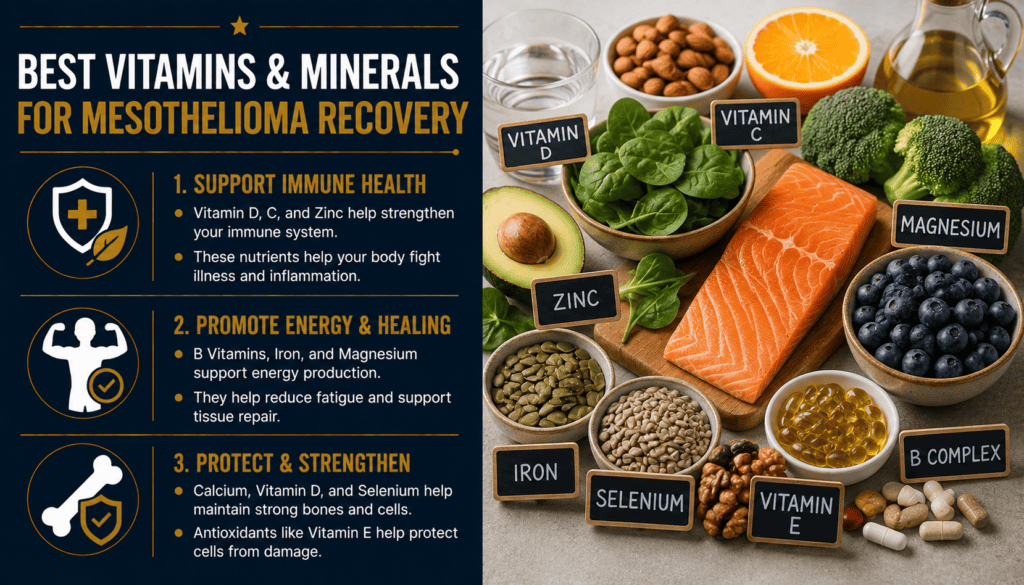
Best Vitamins and Minerals for Mesothelioma Recovery
A practical, food-first guide to nutritional support, deficiency testing and supplement safety during and after treatment.
People living with mesothelioma may struggle with appetite changes, fatigue, weight loss or difficulty preparing meals. Vitamins and minerals are essential for normal body functions, but there is no special vitamin regimen proven to shrink mesothelioma, prevent recurrence or replace treatment. The most useful nutrition plan is individualized: enough food, protein, calories and fluids, with deficiencies addressed when clinically indicated. Ask your oncology team for a registered dietitian experienced in cancer care.
Important: Do not start high-dose vitamins, antioxidant products, mineral pills, IV vitamin infusions or herbal blends without approval from your cancer team. A supplement that sounds natural can interact with cancer medicines or worsen other health problems.
What Recovery Nutrition Really Means
Recovery can mean healing after a procedure, maintaining strength during chemotherapy or immunotherapy, or preserving comfort and function when treatment is ongoing. Nutrition goals vary. For someone losing weight, a calorie-dense snack may be more useful than a restrictive “clean eating” plan. Protein and energy intake often deserve attention before a new supplement.
| Priority | Why it matters | First action |
|---|---|---|
| Adequate calories | Helps prevent unintended weight loss | Report declining intake or weight |
| Protein | Supports tissue repair and muscle maintenance | Include a tolerated protein source regularly |
| Fluids | Supports hydration and normal body function | Ask about fluid limits if heart or kidney disease is present |
| Micronutrients | Corrects actual shortages | Review diet, symptoms and clinically indicated tests |
Read our nutrition and exercise guide and practical nutrition tips for broader food and activity planning. “Boosting immunity” is not a reason to take megadoses; focus on meeting ordinary nutritional needs.
Vitamins to Discuss With Your Care Team
These vitamins contribute to normal health, but a role in the body is not proof that extra doses improve mesothelioma outcomes. Discuss the following only in the context of dietary intake, symptoms, laboratory findings and treatment.
| Vitamin | Normal role | Food examples | When to discuss |
|---|---|---|---|
| Vitamin D | Bone and muscle health | Fortified dairy or alternatives, fatty fish | Low intake, fracture risk or suspected deficiency |
| Vitamin B12 | Red blood cells and nerve function | Fish, eggs, meat, dairy, fortified foods | Anemia, numbness, restricted diet or absorption concerns |
| Folate (B9) | Cell formation | Leafy greens, beans, fortified grains | Low intake or certain anemia findings |
| Vitamin C | Connective tissue and wound healing | Citrus, peppers, strawberries | Very limited produce intake; avoid self-prescribed megadoses |
| Vitamin A | Vision and immune function | Carrots, sweet potatoes, greens, eggs | Diet review; excessive supplements can be toxic |
| Vitamin E | Normal cell function | Nuts, seeds, plant oils | Avoid high-dose products without oncology approval |
Routine food amounts are different from concentrated supplement doses. A clinician may prescribe a vitamin for a documented deficiency, but patients should not assume that higher doses produce faster recovery.
Minerals and Electrolytes
Minerals help with oxygen transport, muscle and nerve activity, bones and fluid balance. Too much can be harmful, particularly with kidney disease or medication interactions.
| Mineral | Why it may matter | Food examples | Caution |
|---|---|---|---|
| Iron | Helps form hemoglobin | Meat, beans, fortified cereals | Do not treat anemia with iron unless iron deficiency is established |
| Calcium | Supports bone health | Dairy, fortified alternatives, calcium-set tofu | Excess supplements can cause problems; check kidney history |
| Magnesium | Supports nerve and muscle function | Beans, nuts, whole grains | Supplements can cause diarrhea and accumulate with kidney impairment |
| Potassium | Supports heart and muscle function | Potatoes, beans, bananas | High or low levels may be dangerous; supplements require guidance |
| Zinc | Supports wound healing and normal immune function | Meat, shellfish, beans | Excess can cause copper deficiency |
| Selenium | Needed in small amounts | Fish, eggs, grains | High-dose supplements can be toxic |
Persistent vomiting, diarrhea, poor fluid intake or certain medicines may alter electrolyte levels. Contact the treatment team for individualized advice rather than replacing electrolytes with over-the-counter powders on your own.
Food-First Meal and Snack Ideas
Food provides nutrients alongside calories and protein. Choose textures and flavors that are comfortable, especially if treatment changes taste or makes swallowing difficult. Follow your clinical team’s food-safety advice if your immune defenses are reduced.
| Eating challenge | Food-first option | Adjustment |
|---|---|---|
| Poor morning appetite | Yogurt or fortified soy yogurt with fruit | Try a small portion first |
| Difficulty chewing | Soft scrambled eggs or smooth bean soup | Modify texture with clinician advice |
| Unintended weight loss | Nut butter toast or a tolerated nutrition shake | Ask a dietitian about added calories and protein |
| Taste changes | Chilled foods or mild seasonings | Avoid foods that trigger nausea |
| Limited energy | Frozen vegetables, canned beans and prepared protein | Use caregiver help and easy assembly meals |
For hydration ideas, see benefits of hydration during cancer therapy. Food plans should also reflect diabetes, kidney disease, swallowing difficulties, food allergies and any special restrictions from the care team.
When Testing or Supplements May Help
Supplements may be appropriate if a person cannot meet needs through food, has a documented deficiency, or has an absorption problem. A doctor or dietitian can decide whether testing, a standard-dose multivitamin or a targeted prescription is useful. Not everyone needs routine blood tests for every nutrient.
| Situation | What to tell the team | Possible next step |
|---|---|---|
| Weeks of poor intake | What and how much you can eat | Dietitian review and targeted assessment |
| Ongoing weight loss | Weight trend and appetite | Calories/protein plan and symptom treatment |
| Anemia or unusual fatigue | Symptoms and recent blood results | Investigate the cause; not all anemia is iron deficiency |
| Numbness or balance changes | Timing, medications and symptoms | Clinical examination and selected tests |
| Bone concerns | Fractures, falls, dietary pattern | Discuss calcium/vitamin D needs and bone assessment |
If your clinician approves a general multivitamin, ask whether one containing no more than approximately 100% of the Daily Value is appropriate; the American Cancer Society suggests this as a cautious option when supplementation is recommended. A prescribed dose to correct a deficiency may differ.
Supplement Risks and Treatment Interactions
Some cancer treatments work partly through processes that high-dose antioxidants could affect. Research is not identical for every treatment or supplement, but authoritative cancer organizations advise caution and discussion with the oncology team. Evidence from other cancer types cannot be assumed to predict an individual mesothelioma patient’s outcome.
| Product or practice | Potential concern | Safer action |
|---|---|---|
| High-dose vitamins C, E or beta-carotene | Possible interference with some cancer treatments; other risks | Do not self-prescribe during treatment |
| High-dose vitamin E | May increase bleeding risk | Review with clinician, especially before procedures |
| Iron tablets | Can be harmful when iron is not deficient | Confirm cause of anemia first |
| Potassium or magnesium powders | May be unsafe with kidney disease or medication effects | Ask whether levels need monitoring |
| Herbal “immune” blends | Ingredients and interactions may be unclear | Bring label or photo to oncology pharmacist |
| IV vitamin infusions | Not established mesothelioma therapy; procedure and interaction risks | Avoid as cancer treatment without specialist discussion |
Tell your team about everything you take, including gummies, powders, teas, injections and products bought online. Never stop a prescribed medicine to start a supplement. Review our complementary therapies guide for questions to bring to your doctor; complementary care must not replace evidence-based treatment.
A Practical Nutrition and Caregiver Plan
A short written plan helps patients and caregivers spot nutrition problems early without turning meals into a source of pressure. Respect the patient’s food preferences and energy level. Ask for help promptly if swallowing becomes difficult, weight falls unintentionally, or nausea prevents drinking.
| When | Patient or caregiver task | When to call |
|---|---|---|
| Before treatment visits | Record appetite, weight trend and all supplements | Bring changes to the care team |
| At meals | Offer small, tolerated protein-rich choices | Report persistent inability to eat |
| Throughout the day | Offer fluids if medically allowed | Report dehydration symptoms or fluid restriction questions |
| Weekly | Review shopping, meal help and dietitian needs | Escalate continued weight loss |
| Before any new supplement | Photograph ingredients and doses | Get oncology approval first |
Pair nutrition support with fatigue management and a realistic daily routine. If eating or drinking becomes impossible, the patient is confused, or there are severe new symptoms, seek urgent medical guidance.
Questions to Ask Your Oncology Team
Bring a complete list of medications and supplements to your next appointment. A pharmacist can review interactions while a registered dietitian addresses intake and weight.
| Question | Why ask |
|---|---|
| Am I losing weight or muscle, and what should I prioritize? | Clarifies whether calories and protein are the immediate goal |
| Do my symptoms suggest a particular deficiency? | Avoids unnecessary tests and pills |
| Should I take a standard multivitamin or a targeted supplement? | Personalizes dose and duration |
| Could this product interact with my treatment or blood thinners? | Checks medication and procedure safety |
| Can you refer me to an oncology dietitian? | Creates a practical food plan |
For treatment-specific questions, see your mesothelioma care team and treatment options.
Frequently Asked Questions
These answers provide general education; individualized recommendations depend on your diagnosis, treatment and other conditions.
What is the best vitamin for mesothelioma recovery?
There is no single best vitamin for every patient. The useful choice depends on diet, symptoms, medical history and any confirmed deficiency. Ask your oncology team or dietitian before starting one.
Can vitamins cure mesothelioma?
No. No vitamin, mineral or supplement has been proven to cure mesothelioma or replace cancer treatment.
Should I take vitamin D?
Vitamin D may be appropriate for some people with low levels or bone-health concerns, but the need and dose should be determined with your clinician.
Is vitamin B12 helpful for cancer fatigue?
B12 can help correct problems caused by B12 deficiency. Fatigue has many possible causes, and taking extra B12 without a deficiency is not an established treatment for cancer-related fatigue.
Are antioxidant supplements safe during chemotherapy or radiation?
Safety is uncertain and some research raises concerns about treatment interference. Avoid high-dose antioxidant supplements unless your oncology team specifically approves them.
Should I take iron if I have anemia?
Not automatically. Cancer-related anemia can have several causes. Your clinician should determine whether iron deficiency is present before recommending iron.
Can a multivitamin help when I cannot eat enough?
A clinician may suggest a standard-dose multivitamin if intake is inadequate, but it does not replace calories, protein or medical care for eating difficulties.
When should I ask for a dietitian?
Ask early if you are losing weight, eating less, having nausea or swallowing problems, or unsure whether supplements are safe with treatment.
Confirmed Medical Sources and Further Reading
The following patient-facing resources inform this article. They support general cancer nutrition and supplement-safety guidance; they do not establish a mesothelioma-specific vitamin cure.
- National Cancer Institute: Nutrition During Cancer Treatment
- National Cancer Institute: Popular Diets, Supplements, and Cancer
- National Cancer Institute: Cancer Therapy Interactions With Foods and Dietary Supplements
- American Cancer Society: Benefits of Good Nutrition During Cancer Treatment
- NIH NCCIH: Antioxidant Supplements—What You Need to Know
Get Help Understanding Your Mesothelioma Options
Call 800.291.0963 to discuss available assistance.
Live chat is available 24/7, 365 days a year.
Eligibility, compensation and outcomes depend on individual circumstances. No result is guaranteed.
⚕️ Legal & Medical Information Disclaimer
This article is educational and is not medical, nutrition or legal advice. Consult your oncology team, registered dietitian and qualified legal professional about your individual circumstances. Never change cancer treatment or begin supplements based on this article alone.