Mesothelioma Multimodal Therapy: Combining Treatments and Planning Care
A patient and family guide to coordinated treatment plans, treatment order, eligibility and realistic goals.
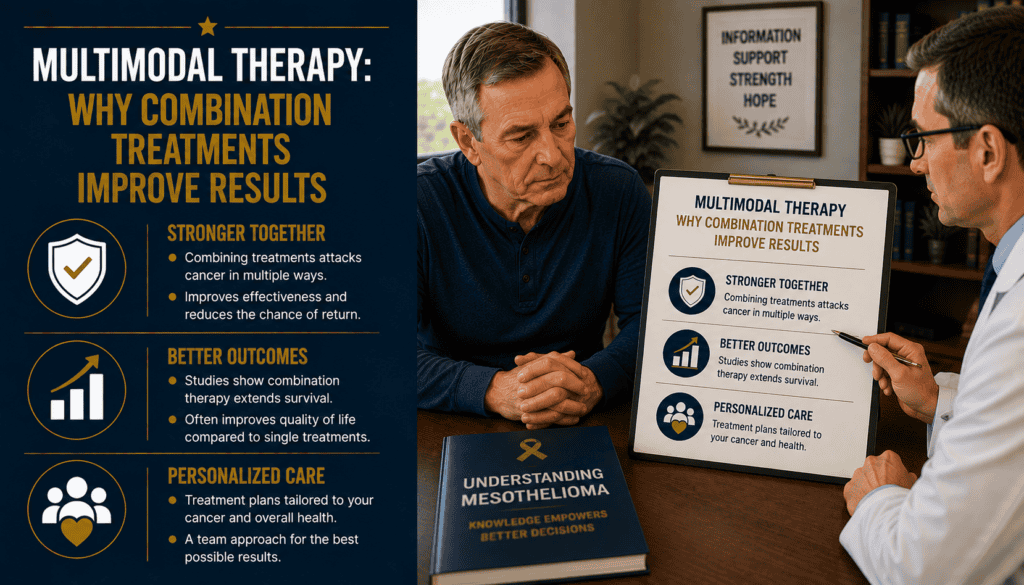
Multimodal therapy means using two or more different treatment methods as part of one coordinated mesothelioma care plan. Depending on the cancer site and the patient’s health, a plan might involve surgery and chemotherapy, surgery and radiation, or systemic treatment alongside procedures that control symptoms. Combining treatments is not automatically better: the potential benefit must outweigh the added burden for the individual patient.
This page focuses on how combinations are chosen and coordinated. For a broader description of individual therapies, see mesothelioma treatment options and the related overview of multimodal therapy.
1. What multimodal therapy means
A multidisciplinary team may recommend more than one treatment because each addresses a different problem. Surgery aims to remove visible tumor in selected patients; drugs can treat cancer cells beyond the surgical field; radiation can address a specific area or relieve symptoms. Supportive care should accompany these approaches rather than wait until treatment ends.
| Term | Plain-language meaning | Important limitation |
|---|---|---|
| Multimodal | A coordinated plan using different treatment modalities. | Not every patient benefits from combining modalities. |
| Neoadjuvant | Treatment given before a planned operation. | The sequence depends on the center and disease. |
| Adjuvant | Treatment given after an operation. | Does not guarantee recurrence prevention. |
| Systemic therapy | Drugs that circulate through the body. | May be used without surgery. |
| Supportive or palliative care | Care for symptoms and quality of life. | Can be provided alongside anticancer treatment. |
The goal may be to control cancer, relieve symptoms, extend life or—only in carefully selected circumstances—attempt treatment with curative intent. Ask the team to describe the goal in writing.
2. Treatments that may be combined
Doctors select components based on the location of the cancer, pathology, stage or disease extent, lung and heart function, prior treatment and patient priorities.
| Modality | Possible role in a combined plan | Key discussion |
|---|---|---|
| Surgery | Remove visible tumor in carefully selected patients. | Operability, extent of resection and recovery. |
| Chemotherapy | Treat cancer cells systemically or, in certain abdominal operations, within the abdomen. | Expected benefit, kidney and blood-count effects. |
| Immunotherapy | Treat unresectable disease in suitable patients; some combinations are established systemic options. | Immune-related inflammation and eligibility. |
| Radiation | Target a defined area or relieve pain. | Protection of healthy lung and nearby organs. |
| Procedures for fluid | Drain pleural or abdominal fluid and reduce breathlessness or pressure. | Symptom management, not eradication of cancer. |
Read more about surgery, chemotherapy and radiation, immunotherapy and radiation therapy. Combining immunotherapy drugs with each other is a drug regimen; it should not be confused with an automatic recommendation for surgery plus radiation plus chemotherapy.
3. Multimodal therapy for pleural mesothelioma
Pleural mesothelioma develops in the lining around the lungs. In selected patients, an experienced thoracic team may consider surgery as one part of a plan. Other patients are better served by systemic therapy and symptom-directed procedures. The feasibility and value of surgery remain patient-specific and should be reviewed carefully with a mesothelioma-experienced team.
| Clinical situation | Potential discussion | What to clarify |
|---|---|---|
| Potentially operable disease | Whether surgery plus additional treatment is reasonable. | Is the aim macroscopic complete resection, and what function may be lost? |
| Unresectable disease | Systemic immunotherapy or chemotherapy-based treatment. | Why this regimen, and how will response be measured? |
| Painful localized disease | Radiation for symptom relief in selected circumstances. | Expected relief and risk to lung or other organs. |
| Recurrent pleural fluid | Drainage, pleurodesis or indwelling catheter. | How will symptoms and drainage be managed at home? |
Operations such as pleurectomy/decortication and extrapleural pneumonectomy are major procedures with different risks. A surgeon should explain why a particular operation is being considered, its alternatives, and how it affects later treatment. A second opinion may be valuable before an irreversible operation.
4. Multimodal therapy for peritoneal mesothelioma
Peritoneal mesothelioma affects the lining of the abdomen and has a different treatment pathway from pleural disease. In carefully selected patients, cytoreductive surgery may remove visible tumor, followed during the operation by heated intraperitoneal chemotherapy (HIPEC). The combination is not appropriate for everyone, and it requires specialized evaluation.
| Step | Purpose | Important consideration |
|---|---|---|
| Specialist assessment | Determine disease extent and whether surgery is feasible. | Imaging alone may not capture all disease. |
| Cytoreductive surgery | Remove as much visible tumor as safely possible. | Extent of surgery and recovery vary. |
| HIPEC | Circulate heated chemotherapy in the abdomen during surgery. | Drug exposure, organ function and complications require monitoring. |
| Systemic therapy | Treat disease when surgery is unsuitable or at other points in care. | Regimen and timing depend on the case. |
Ask a center experienced in peritoneal surface malignancies to explain expected recovery, nutritional needs and whether surgery and HIPEC are reasonable in the individual case. A plan for pleural disease should not be copied to abdominal disease.
5. Who may be eligible for combined treatment
Eligibility is a clinical judgment, not a checklist patients can apply on their own. A multidisciplinary team should review diagnosis, disease extent, performance status, organ function and personal goals. A person may be eligible for one combination but not another.
| Factor | Why it matters | Useful question |
|---|---|---|
| Pathology and cell type | Helps confirm diagnosis and informs treatment planning. | Has a specialist reviewed my tissue? |
| Cancer location and extent | Affects surgery and radiation feasibility. | Which scans or procedures define my disease extent? |
| Lung and heart function | Important for chest surgery and some radiation plans. | What is my risk of reduced breathing capacity? |
| Kidney, liver and blood tests | May affect drug selection and dosing. | What needs to be checked before each cycle? |
| Other conditions and medicines | Can alter immune, surgical or chemotherapy risks. | Are there interactions or contraindications? |
| Patient goals and support | Treatment burden and recovery must fit preferences. | What are the alternatives if I decline a component? |
See mesothelioma diagnosis and finding mesothelioma doctors for help organizing specialist reviews.
6. Treatment sequence, follow-up and changes
Multimodal therapy is a sequence of decisions rather than a fixed recipe. Some patients begin with drugs, some have surgery first, and others do not undergo surgery. The team should define checkpoints at which scans, symptoms, laboratory results and patient preferences are reviewed.
| Phase | What usually needs coordination | Decision point |
|---|---|---|
| Before treatment | Pathology review, staging, organ-function tests, goals and consent. | Is the planned combination still appropriate? |
| First treatment | Schedule treatment and prevention or management of side effects. | Is treatment tolerable and achieving its intended effect? |
| Between modalities | Allow recovery and reassess disease. | Proceed, delay, modify or stop? |
| After active treatment | Imaging, symptom checks and rehabilitation. | What findings would change the plan? |
Ask for a written timeline with named contacts for urgent problems. A plan can change when scans reveal more extensive disease or side effects make another modality unsafe; changing course is not necessarily a treatment failure.
7. Risks, recovery and supportive care
Combining treatments may increase appointment demands, fatigue, recovery time and the possibility of overlapping side effects. Surgery may cause complications or prolonged rehabilitation; chemotherapy can lower blood counts and cause nausea or kidney effects; immunotherapy can cause inflammation in organs; radiation can irritate tissues within its treatment field. The risks depend on the actual regimen.
| Concern | What to discuss | Practical preparation |
|---|---|---|
| Breathing changes | Expected lung-function changes and when to seek help. | Know the team’s emergency contact plan. |
| Infection or fever | Risks during drug treatment or after surgery. | Get individualized fever instructions. |
| Immune-related reactions | New diarrhea, cough, rash or other symptoms on immunotherapy. | Report new symptoms promptly; do not self-treat severe symptoms. |
| Nutrition and mobility | Weight loss, appetite, pain and deconditioning. | Request dietitian, physical therapy or rehabilitation support. |
| Time and financial burden | Travel, missed work, caregiving and insurance approvals. | Ask social work and billing staff for a written plan. |
Supportive care—including pain relief, fluid management, nutrition and emotional support—can begin during active treatment. For planning expenses, see mesothelioma treatment costs. Hospice is a separate care approach for patients whose goals and eligibility align with it; see hospice care for details.
8. Questions and next steps
Bring these questions to a multidisciplinary consultation. If possible, have a family member take notes and request copies of the treatment plan and pathology report.
| Ask the team | Why it helps |
|---|---|
| What is the precise goal of this combination? | Separates symptom control, disease control and curative intent. |
| Why combine these treatments instead of using one? | Clarifies evidence and expected added benefit. |
| What alternatives do I have, including no surgery? | Supports an informed choice. |
| What is the proposed order and timing? | Makes the plan and recovery periods understandable. |
| Which complications are most likely in my case? | Connects general risks to individual health. |
| What would cause you to change or stop the plan? | Defines reassessment points. |
| Would a specialist second opinion or trial be appropriate? | Identifies additional options. |
| Who handles symptoms, bills and scheduling? | Creates a coordinated care pathway. |
Before consenting, confirm who coordinates treatment across departments and whether each component is available at the same center. You can also review the National Cancer Institute’s patient treatment overview and mesothelioma clinical trial listings. Trial availability and eligibility change.
9. Frequently asked questions
Is multimodal therapy a cure for mesothelioma?
No combination guarantees a cure. Selected patients may receive treatment with curative intent, but recurrence remains possible. Ask the team to define the goal for your case.
Does every patient need surgery, chemotherapy and radiation?
No. Multimodal therapy does not mean everyone receives all three. The choice and order depend on disease site, extent, health and preferences.
Is immunotherapy part of multimodal treatment?
It may be one component of a broader coordinated plan, but a two-drug immunotherapy regimen alone should not automatically be described as surgery-based multimodal therapy.
How is pleural treatment different from peritoneal treatment?
Pleural disease involves the chest lining and may call for thoracic surgery, systemic treatment or symptom-directed procedures. Selected peritoneal patients may be considered for cytoreductive surgery with HIPEC.
Can I receive multimodal therapy if surgery is not possible?
A coordinated plan may still use systemic therapy with radiation or symptom-relieving procedures. Ask your oncologist which combination is appropriate.
How long does multimodal treatment take?
There is no universal timeline. It depends on the regimen, number of cycles, recovery and reassessment. Request a personalized written schedule.
What if I develop serious side effects?
Contact the treating team promptly and follow its urgent-care instructions. Clinicians may pause, adjust or stop a component if risks become unacceptable.
Should I seek a second opinion?
A second opinion from a team experienced in the relevant mesothelioma type can help clarify options, especially before major surgery or a complex treatment sequence.
Medical sources and further reading
- National Cancer Institute: Treatment for Mesothelioma — treatment modalities, clinical factors and follow-up.
- National Cancer Institute: Malignant Mesothelioma Treatment (Health Professional PDQ) — evidence and treatment approaches.
- National Cancer Institute: Mesothelioma Clinical Trials — trial search and eligibility information.
Editorial note: This page explains treatment planning; it does not imply that all treatment combinations are proven to improve survival or are appropriate for every patient.
Get Help Understanding Your Options
Call 800.291.0963. Live chat is available 24/7, 365 days a year. Submit Your Case. We can help you explore information and possible next steps. No treatment outcome or compensation is guaranteed.
⚕️ Legal & Medical Information Disclaimer
This page is educational and is not medical or legal advice. Treatment decisions require an individual evaluation by qualified clinicians; legal questions should be discussed with a qualified attorney.