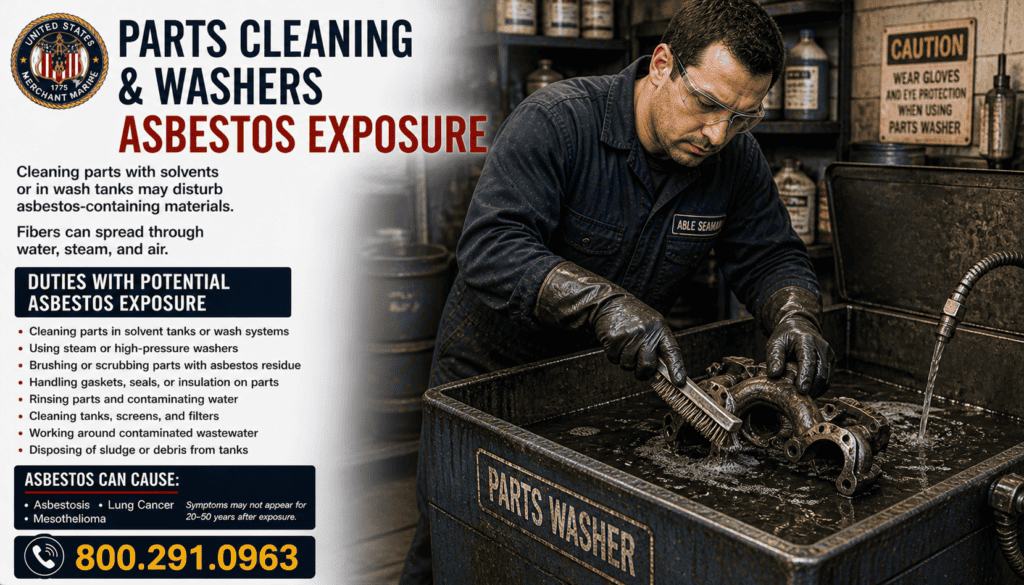
🔧 Parts Washers Asbestos Exposure
People who worked in automotive parts-washer benches and maintenance areas may have encountered asbestos-containing friction materials or residues during historical auto repair. The relevant question is which products were serviced, how the work was performed, and whether dust from an identified asbestos source reached the worker.
This guide explains parts washers asbestos exposure, affected workers, specific tools and components, mesothelioma and lung cancer, and possible legal options. A job title or the presence of a machine alone does not establish exposure.
🏭 Where Asbestos Was Found
Historically, asbestos appeared in some automotive friction products because its fibers resisted heat. In automotive parts-washer benches and maintenance areas, the exposure question starts with the vehicle and replacement component, not with the building or shop name. The broader Auto Repair Shops Asbestos Exposure guide describes how work practices and repair areas can affect contact with dust.
This page addresses parts washers broadly; the related parts-cleaning washer article focuses on cleaning operations and residue management. Neither machine is proof of asbestos content. Different vehicles and replacement parts were supplied with different formulations. A parts catalog, old packaging, invoice or manufacturer bulletin may help establish whether asbestos was used in a particular component.
Open-Tank Parts Washers
Parts washers often use recirculated cleaning fluid; the tank is not automatically an asbestos source. Workers may have been exposed directly while dismantling a part or indirectly when dust from an adjacent job crossed a shared bench or service bay. The date of the repair and the handling method are essential to assessing either pathway.
Brake Assemblies And Clutch Parts
Previously used friction assemblies may carry dust from asbestos-containing components, depending on their history. Workers may have been exposed directly while dismantling a part or indirectly when dust from an adjacent job crossed a shared bench or service bay. The date of the repair and the handling method are essential to assessing either pathway.
Historical Brake Products Asbestos Exposure information is relevant when used brake friction parts or their residue were handled. Clutch Products Asbestos Exposure addresses clutch components, which require their own product identification rather than an assumption that every friction part was alike.
👷 Workers And Daily Jobs
Repair technicians and shop cleaners using parts washers may have performed disassembly, component replacement, inspection, cleaning and reassembly during the same shift. A single employee could move between workstations, so the exposure history should capture the full sequence of duties, not merely the task named on a payroll record.
Preparing Parts For Washing
Dry brushing or blowing debris off a used assembly before washing can create a dust hazard separate from the washer itself. Relevant details include the make and model of the vehicle, approximate service year, the material being disturbed, whether the work was dry or wet, and the location of coworkers. These observations can be recorded without guessing that every dusty repair involved asbestos.
Manual Parts Washing
Scrubbing, spraying and rinsing may remove deposits; the risk changes with splash control, wetness and materials being cleaned. Relevant details include the make and model of the vehicle, approximate service year, the material being disturbed, whether the work was dry or wet, and the location of coworkers. These observations can be recorded without guessing that every dusty repair involved asbestos.
The occupational background in Car Mechanics Asbestos Exposure helps explain how technicians rotated among brake, clutch and other service duties. The discussion of Auto Mechanics And Brake–Clutch Dust Exposure addresses shared work areas and historically dusty repair practices.
🧱 Products And Equipment
Some components were asbestos-containing, while others were metal, rubber, synthetic friction materials or shop equipment with no asbestos in their construction. The table separates possible asbestos sources from tools that could disturb residue. A shop inventory is useful only when tied to the period of employment.
| Component Or Work Area | Why It Matters |
|---|---|
| Open-Tank Parts Washers | Parts washers often use recirculated cleaning fluid; the tank is not automatically an asbestos source. |
| Brake Assemblies And Clutch Parts | Previously used friction assemblies may carry dust from asbestos-containing components, depending on their history. |
| Washer Filters And Traps | Traps, baskets and filters collect debris and may be disturbed during maintenance or replacement. |
| Dried Residue And Work Surfaces | Residues left on baskets, benches or containers can be redistributed if allowed to dry and handled without appropriate controls. |
Washer Filters And Traps
Traps, baskets and filters collect debris and may be disturbed during maintenance or replacement. When evaluating a historical job, look for part numbers, supplier invoices, service manuals and any available safety information. Avoid treating an equipment category as a verified asbestos source unless the relevant component or residue can be identified.
Dried Residue And Work Surfaces
Residues left on baskets, benches or containers can be redistributed if allowed to dry and handled without appropriate controls. When evaluating a historical job, look for part numbers, supplier invoices, service manuals and any available safety information. Avoid treating an equipment category as a verified asbestos source unless the relevant component or residue can be identified.
For brake-related equipment, see Brake Equipment Asbestos Exposure; for turning and resurfacing equipment, see Brake Lathe Machinery Asbestos Exposure. These related topics distinguish friction-material dust from the metal-cutting operation itself.
🌫️ How Exposure Occurred
Airborne asbestos exposure can occur when asbestos-containing material is disturbed and fibers reach a breathing zone. The quantity released depends on the task, material condition, ventilation and controls. A dusty shop does not, by itself, prove that the dust contained asbestos.
Cleaning Traps And Filters
Sludge handling and filter changes warrant attention to the source of debris and whether deposits dry out. A chronology should note whether compressed air, dry brushing, local exhaust, wet cleaning or enclosed equipment was used. The method of cleaning may be as important as the original repair because settled residue can be disturbed again.
End-Of-Shift Cleanup
Wiping wet surfaces differs from sweeping dried residues; coworkers may encounter contamination after the original repair is complete. A chronology should note whether compressed air, dry brushing, local exhaust, wet cleaning or enclosed equipment was used. The method of cleaning may be as important as the original repair because settled residue can be disturbed again.
Brake Service Asbestos Exposure explains historical brake-work exposure pathways. Clutch Replacement Asbestos Exposure describes how transmission removal and clutch handling can produce a different pattern of contact with friction debris. Neither link establishes the contents of an individual shop’s parts.
OSHA provides specific brake and clutch repair controls, including negative-pressure enclosure/HEPA methods and low-pressure wet cleaning approaches. Compressed-air blowouts and uncontrolled dry cleaning are not substitutes for those controls. Historical practices must be evaluated in light of the rules and equipment available at the time.
🩺 Mesothelioma After Workplace Exposure
Understanding Mesothelioma And Latency
Mesothelioma is a malignancy of the mesothelial lining, most often the pleura surrounding the lungs. Asbestos is an established major cause. The disease can appear decades after exposure, so a person diagnosed today may need to reconstruct jobs from many years earlier. Not everyone exposed develops mesothelioma, and the diagnosis alone cannot identify a specific manufacturer.
Mesothelioma Diagnosis explains imaging, biopsy and pathology review. Patients should discuss their occupational history with their oncology team, including any automotive repair work and other possible asbestos exposures. A qualified specialist can interpret medical findings; an attorney separately evaluates the legal evidence.
Medical Care And Work History
A medical record may describe pleural thickening, fluid, suspicious imaging or a pathology diagnosis, but these findings have different meanings. Request copies of pathology reports, imaging and treatment summaries. Keep them separate from product and employment evidence, which answers a different question about where exposure may have occurred.
Treatment choices depend on tumor type, stage, health and specialist recommendations. The Mesothelioma Treatments overview can help patients prepare questions about surgery, systemic therapy, symptom management and clinical trials. No website can determine a particular patient’s treatment plan.
🫁 Asbestos-Related Lung Cancer
Asbestos Exposure And Lung Cancer
Asbestos is a recognized cause of lung cancer. Smoking is another major risk factor; exposure to both can raise risk more than either exposure alone. An individual diagnosis requires clinical evaluation and should not be attributed automatically to one job, tool or product. Other workplace carcinogens and personal risk factors may also matter.
The What is Asbestos Lung Cancer? guide discusses diagnosis and the role of occupational history. Patients should tell their clinicians about known asbestos work, smoking history and other exposures rather than leaving out information that might affect care.
How Lung Cancer Claims Differ
A lung cancer claim may require evidence of asbestos exposure and medical causation under applicable law. The requirements can differ from those for mesothelioma, and a smoking history does not automatically resolve the question. A medical team and qualified legal professional perform distinct assessments.
Lung Cancer Asbestos Lawsuit describes general legal considerations. It is important to preserve pathology reports and relevant occupational records promptly because state filing deadlines can apply even while treatment is ongoing.
📋 Work History And Evidence
To reconstruct work in automotive parts-washer benches and maintenance areas, begin with the shop name, location, dates of employment, assigned duties and specific vehicles or equipment. Where possible, record the identity of a part, the way it was removed or cleaned, and whether anyone used compressed air or abrasive tools. A recollection should be labeled as such rather than presented as a laboratory finding.
| Record | Potential Use |
|---|---|
| Payroll, tax or union records | Place the worker at a shop during relevant years |
| Service tickets and repair orders | Identify vehicle models, parts and tasks |
| Parts catalogs and purchase invoices | Help distinguish historical product formulations |
| Photographs and coworker accounts | Describe shop layout and actual practices |
| Medical and pathology records | Document diagnosis and treatment |
Documenting Product Identity
A reliable record distinguishes a brand name recalled by a mechanic from a part number established by an invoice. Some products changed formulation over time. If the original part cannot be identified, say so; a qualified reviewer can assess what other records are available without requiring a worker to handle old suspect materials.
Additional shop-wide context appears in historical automotive service records. Workers who used parts-cleaning equipment should also distinguish the cleaning machine from residue brought to it by previously serviced components.
⚖️ Compensation And Legal Options
Personal Injury And Wrongful Death Lawsuits
Potential civil claims depend on the diagnosis, the jurisdiction, evidence of exposure to an identified product and the responsible parties. Some claims concern manufacturers or suppliers rather than a former employer. Workers’ compensation, product liability and wrongful-death rules are not interchangeable, and eligibility is never automatic.
The Mesothelioma Lawsuit overview explains common legal routes after diagnosis. The Legal Pathways For Auto Mechanics Exposed To Asbestos Brakes article focuses on repair-industry issues, including how product evidence can matter.
Asbestos Trust Funds And Deadlines
Certain bankrupt asbestos companies established trusts with their own exposure criteria, documentation requirements and payment procedures. A claim against a trust is not the same as a lawsuit, and the existence of a trust does not mean that every automotive worker qualifies. State deadlines and trust filing rules may differ.
What Are Asbestos Trust Funds? describes this separate process. An experienced attorney can assess whether any identified product is associated with an eligible trust and explain how different claims may interact.
Family Records And Practical Next Steps
Families can preserve employment records, service notebooks, photographs and medical documents when the former worker is too ill to reconstruct the history. Ask about the applicable statute of limitations promptly; a legal deadline may depend on diagnosis, death and state law. No particular compensation amount can be promised.
❓ Frequently Asked Questions
Did Every Parts Washer Contain Asbestos?
No. A shop or machine name does not establish asbestos content. The historical component, formulation and manner of disturbance need separate evidence.
Can Nearby Workers Have Been Exposed?
Potentially. When asbestos-containing friction dust was disturbed, people sharing a bay could encounter airborne material depending on distance, ventilation and duration.
Does A Mesothelioma Diagnosis Prove Which Product Caused It?
No. The medical diagnosis and evidence tying exposure to a particular product or workplace are separate questions.
Should I Handle An Old Part To Check For Asbestos?
No. Do not scrape, grind or sample suspect material yourself. A qualified professional can advise on identification and safe handling.
What If The Shop Has Closed?
Payroll records, service invoices, supplier catalogs, union files and former coworkers may still help reconstruct the work history.
Can Families Explore Compensation After A Death?
Possibly. Wrongful-death and other claims depend on state law, diagnosis, evidence and deadlines; seek qualified advice promptly.
🧭 Summary
Parts Washers Asbestos Exposure concerns specific historical repair activities, not an assumption that every tool or automotive part contained asbestos. The most useful account identifies the component, date, work practice, possible dust pathway and worker location. Medical evaluation and timely legal review address separate questions.
📚 Confirmed Sources
The following official sources support general occupational and medical information. They do not establish any individual exposure, diagnosis or legal eligibility.
- OSHA — Asbestos
- OSHA — Brake And Clutch Repair Work Practices
- National Cancer Institute — Asbestos And Cancer Risk
- NIOSH — Asbestos
Get The Compensation You Deserve
Find out if you may qualify for asbestos compensation today. Call 800.291.0963 or Submit Your Case Here.
Help is available 24/7/365. 25+ years of experience.
Disclaimer: Mesothelioma Help Center is not a law firm or medical provider and does not determine legal or VA eligibility. This information is not individualized medical or legal advice.