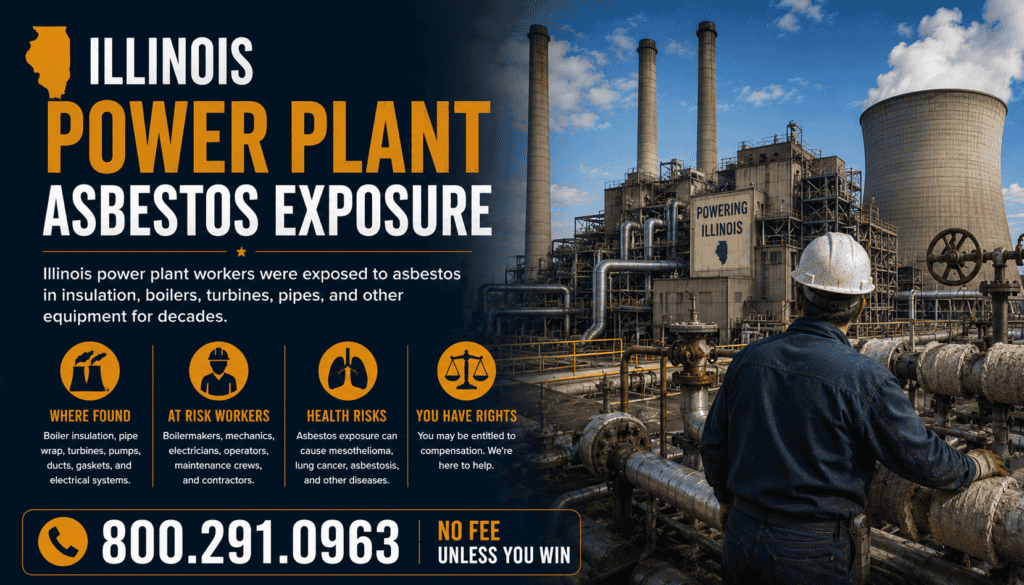
⚡ Illinois Power Plant Asbestos Exposure
Illinois power plants supplied electricity to homes, businesses, factories, and communities across the state for decades. While these facilities played a vital role in the state’s industrial growth, they also became some of the most common workplaces for asbestos exposure. Before the 1980s, asbestos was widely used throughout power generating stations because it could withstand extreme heat, steam, electricity, and fire.
Thousands of Illinois power plant workers—including electricians, boiler operators, pipefitters, maintenance mechanics, welders, engineers, and contractors—worked around asbestos-containing insulation and equipment every day. Many never knew that inhaling asbestos fibers could eventually lead to mesothelioma, asbestos lung cancer, asbestosis, and other serious diseases decades after their exposure.
Power plants were filled with miles of insulated steam pipes, massive boilers, turbines, pumps, valves, generators, electrical switchgear, and other high-temperature equipment. Routine maintenance often disturbed aging asbestos insulation, releasing microscopic fibers into the air where workers could unknowingly breathe them.
If you or a loved one worked at an Illinois power plant and later developed an asbestos-related illness, you may have legal options. Learn more about your rights on our Illinois Mesothelioma Lawsuits page.
🏭 Why Asbestos Was Used in Illinois Power Plants
For much of the twentieth century, asbestos was considered one of the best industrial insulation materials available. Electric utilities depended on asbestos because it resisted extreme temperatures, reduced energy loss, helped prevent fires, and protected expensive equipment from heat damage.
Nearly every section of a power generating station could contain asbestos materials. Engineers designed these facilities to operate continuously under high temperatures and pressure, making asbestos an attractive building material.
Common areas where asbestos was installed included:
- Boiler rooms
- Turbine rooms
- Steam tunnels
- Pipe chases
- Pump rooms
- Electrical rooms
- Generator halls
- Mechanical equipment rooms
- Maintenance shops
- Control rooms
- Cooling systems
- Utility corridors
Many older Illinois generating stations continued operating with asbestos-containing materials well into the 1980s and 1990s. During repairs, shutdowns, equipment replacements, or demolition projects, asbestos fibers could easily become airborne.
For additional information about industrial workplaces, visit our Illinois Industrial Asbestos Exposure and Illinois Asbestos Exposure Sites pages.
🔥 Common Sources of Asbestos Exposure Inside Illinois Power Plants
Workers often encountered asbestos during routine maintenance rather than during normal power generation. Simply replacing worn insulation, servicing turbines, repairing valves, or removing old gaskets could release asbestos dust throughout large sections of the plant.
Common asbestos-containing materials found inside Illinois power plants included:
- Boiler insulation
- Pipe insulation
- Block insulation
- Steam pipe covering
- Turbine insulation
- Pump insulation
- Valve packing
- Gaskets
- Packing materials
- Electrical insulation
- Fireproof wall panels
- Ceiling tiles
- Floor tiles
- Cement products
- Spray-on fireproofing
- Thermal insulation
- Expansion joints
- Industrial adhesives
- Furnace insulation
- HVAC insulation
- Cooling tower components
Many of these materials are discussed in greater detail on our Illinois Asbestos Insulation Products, Illinois Industrial Asbestos Products, and Illinois Power Generation Equipment Asbestos Exposure pages.
👷 Illinois Power Plant Workers Most at Risk
Although nearly everyone working inside an older generating station may have encountered asbestos, certain occupations experienced significantly higher exposure because they worked directly with insulated equipment throughout their careers.
High-risk occupations included:
- Boiler operators
- Boiler mechanics
- Pipefitters
- Steamfitters
- Electricians
- Maintenance mechanics
- Millwrights
- Welders
- Insulators
- Turbine mechanics
- Instrument technicians
- HVAC technicians
- Engineers
- Plant operators
- Contractors
- Construction workers
- Laborers
- Industrial mechanics
- Pump mechanics
- Utility maintenance personnel
These workers frequently removed insulation, replaced worn gaskets, serviced pumps, repaired steam systems, and performed equipment overhauls that disturbed asbestos-containing materials.
Learn more about these occupations on our Illinois Power Plant Workers Mesothelioma, Illinois Pipefitters Mesothelioma Lawsuit, Illinois Electricians Asbestos Exposure, and Illinois Construction Workers Mesothelioma pages.
⚙️ Equipment That Frequently Contained Asbestos
Power generating stations relied on large industrial equipment that often incorporated asbestos-containing components to improve heat resistance and reduce fire hazards.
Equipment commonly associated with asbestos exposure included:
- Steam boilers
- Steam turbines
- Generators
- Condensers
- Pumps
- Industrial valves
- Heat exchangers
- Electrical switchgear
- Circuit breakers
- Transformers
- Steam piping
- Industrial furnaces
- Cooling systems
- Expansion joints
- Compressors
- Industrial fans
- Mechanical seals
- Pipe flanges
- Pressure vessels
- Steam traps
Many of these systems are covered in our Illinois Equipment & Machinery Asbestos Exposure and Illinois Power Generation Equipment Asbestos Exposure guides.
🏭 Historic Illinois Power Plants Where Asbestos May Have Been Present
Illinois has operated dozens of coal-fired, natural gas, nuclear, municipal, and industrial power plants over the past century. Many of the older generating stations were originally built when asbestos was considered a standard industrial construction material. As a result, asbestos insulation, fireproofing, pipe covering, electrical insulation, and mechanical components were commonly installed throughout these facilities.
Although not every power plant contained the same materials, workers at many Illinois generating stations may have encountered asbestos while performing maintenance, equipment repairs, plant expansions, or demolition projects.
Examples of Illinois power plants where asbestos may have been present include:
- Baldwin Energy Complex
- Braidwood Generating Station
- Byron Nuclear Generating Station
- Clinton Power Station
- Crawford Generating Station
- Dresden Generating Station
- Edwards Power Plant
- Fisk Generating Station
- Havana Power Station
- Hennepin Power Station
- Joliet Generating Station
- LaSalle County Generating Station
- Powerton Generating Station
- Quad Cities Generating Station
- State Line Power Station
- Vermilion Power Station
- Waukegan Generating Station
- Will County Generating Station
- Wood River Power Station
- Zion Nuclear Power Station
Workers employed by utility companies, maintenance contractors, construction firms, insulation companies, and equipment manufacturers may all have encountered asbestos-containing materials at these and other Illinois power plants.
Many of these facilities also relied on equipment discussed in our Illinois Equipment & Machinery Asbestos Exposure and Illinois Power Generation Equipment Asbestos Exposure guides.
🔧 Maintenance and Repair Created the Greatest Exposure Risks
Many power plant employees were not exposed while simply operating the facility. Instead, the greatest asbestos exposure often occurred during maintenance shutdowns, equipment repairs, and modernization projects.
As insulation aged, it became brittle and could easily crumble when disturbed. Workers removing insulation from boilers, turbines, pumps, valves, steam pipes, and electrical equipment often released invisible asbestos fibers into the surrounding air.
Routine maintenance activities that frequently disturbed asbestos included:
- Removing old pipe insulation
- Rebuilding boilers
- Repairing turbines
- Replacing gaskets
- Installing new valves
- Repairing pumps
- Servicing steam systems
- Electrical upgrades
- HVAC maintenance
- Demolition projects
- Equipment replacements
- Plant expansions
- Insulation removal
- Steam pipe repairs
- Generator maintenance
Maintenance crews, outside contractors, electricians, pipefitters, millwrights, and insulation workers often worked side-by-side during these projects, increasing the number of individuals exposed.
Learn more about high-risk occupations by visiting:
- Illinois Factory Workers Asbestos Exposure
- Illinois Railroad Workers Asbestos Exposure
- Illinois Construction Asbestos Exposure
- Illinois Industrial Asbestos Exposure
⚠️ Secondhand Asbestos Exposure From Illinois Power Plants
Not everyone diagnosed with an asbestos-related disease worked inside a power plant. Family members sometimes developed mesothelioma after repeated exposure to asbestos fibers brought home on contaminated work clothing, boots, gloves, and tools.
Before employers understood the dangers of asbestos, workers frequently returned home without changing clothes or showering. Dust collected on jackets, uniforms, lunch boxes, tool bags, and vehicle seats. Spouses often shook out dusty clothing before washing it, while children may have hugged parents still wearing contaminated work clothes.
This type of secondary exposure has been linked to mesothelioma and other asbestos-related diseases, even among individuals who never worked directly with asbestos themselves.
🧱 Asbestos Products Commonly Used in Illinois Power Plants
Power plants depended on thousands of asbestos-containing products designed to withstand high temperatures and demanding industrial conditions. Many manufacturers supplied insulation and mechanical components that remained in service for decades.
Common asbestos-containing products included:
- Thermal insulation
- Pipe insulation
- Boiler insulation
- Block insulation
- Fireproof cement
- Refractory materials
- Industrial gaskets
- Valve packing
- Pump packing
- Rope insulation
- Expansion joint materials
- Electrical insulation
- Switchgear components
- Control panels
- Ceiling tiles
- Floor tiles
- Roofing materials
- Industrial adhesives
- Pipe covering
- Furnace insulation
Additional information is available on our:
- Illinois Asbestos Insulation Products
- Illinois Industrial Asbestos Products
- Illinois Asbestos Products Used in Construction
- Illinois Automotive Asbestos Products
🏢 Other Illinois Industrial Facilities With Similar Asbestos Risks
Workers who spent time at power plants often also worked at other industrial facilities that relied on similar steam systems, boilers, and insulated equipment.
Other Illinois workplaces where asbestos exposure commonly occurred include:
- Steel mills
- Manufacturing plants
- Chemical plants
- Oil refineries
- Railroad maintenance shops
- Paper mills
- Cement plants
- Heavy equipment factories
- Municipal utility facilities
- Public buildings
Many workers moved between these industries during their careers, increasing their cumulative asbestos exposure over time.
To continue your research, visit:
- Illinois Manufacturing Asbestos Exposure
- Illinois Asbestos Exposure Sites
- Illinois Public & Government Buildings Asbestos Exposure
- Illinois Mesothelioma Lawsuits
💰 Compensation May Be Available for Illinois Power Plant Workers
Many former Illinois power plant employees were never warned that the insulation, boilers, turbines, steam pipes, pumps, and electrical equipment they worked around contained asbestos. Years or even decades later, some workers have been diagnosed with mesothelioma, asbestos lung cancer, asbestosis, or other asbestos-related diseases linked to their occupational exposure.
If you were exposed to asbestos while working at an Illinois power plant, you may have legal options to pursue compensation. Depending on your work history, diagnosis, and the companies responsible for your exposure, compensation may be available through:
- Mesothelioma lawsuits
- Asbestos personal injury claims
- Asbestos bankruptcy trust funds
- Wrongful death lawsuits
- Settlements with responsible manufacturers
- Veterans benefits for qualifying military service
- Other legal compensation available under Illinois law
Every asbestos exposure case is unique. Factors such as your diagnosis, employment history, exposure locations, and the asbestos-containing products involved may affect the compensation available.
Learn more about your legal rights on our Illinois Mesothelioma Lawsuits page.
⚖️ Illinois Filing Deadlines for Power Plant Asbestos Claims
Illinois law limits the amount of time individuals have to file an asbestos-related lawsuit after receiving a diagnosis. Because filing deadlines vary depending on the facts of each case, it is important to investigate your legal options as soon as possible.
Many former power plant workers may also qualify for compensation through asbestos bankruptcy trust funds established by companies that manufactured asbestos-containing insulation, boilers, pumps, valves, turbines, gaskets, and other industrial products commonly used in power plants.
Learn more about these legal resources by visiting:
- Illinois Mesothelioma Statute of Limitations
- Illinois Asbestos Trust Fund Claims
- Illinois Wrongful Death Mesothelioma Lawsuits
- Illinois Asbestos Lung Cancer Lawsuits
❓ Frequently Asked Questions About Illinois Power Plant Asbestos Exposure
Why was asbestos used in Illinois power plants?
Asbestos was widely used because it resisted heat, fire, electricity, and chemical damage. It insulated boilers, turbines, steam pipes, generators, pumps, electrical equipment, and other high-temperature systems found throughout power generating stations.
Which Illinois power plant workers faced the greatest asbestos exposure?
Pipefitters, steamfitters, boiler operators, electricians, insulators, maintenance mechanics, millwrights, welders, contractors, plant operators, engineers, and construction workers often experienced the highest levels of asbestos exposure.
Can power plant maintenance work release asbestos fibers?
Yes. Removing insulation, replacing gaskets, repairing boilers, servicing turbines, replacing valves, and demolishing older equipment frequently disturbed asbestos-containing materials and released microscopic fibers into the air.
Can asbestos exposure occur decades before mesothelioma develops?
Yes. Mesothelioma often develops 20 to 50 years after asbestos exposure. Many Illinois power plant workers diagnosed today were exposed during the 1960s, 1970s, or 1980s.
Could family members also have been exposed?
Yes. Workers sometimes carried asbestos dust home on clothing, boots, gloves, tools, and vehicles. Family members may have been exposed while handling contaminated work clothes or through repeated household contact.
Are asbestos materials still found in older Illinois power plants?
Some older generating stations and industrial facilities may still contain asbestos-containing insulation or building materials. Renovation, maintenance, and demolition projects require specialized safety procedures to prevent exposure.
Can retired power plant workers still file a claim?
Possibly. Many retired workers diagnosed years after leaving the industry may still qualify to pursue compensation. Eligibility depends on several factors, including diagnosis, exposure history, and applicable filing deadlines.
Where can I learn more about asbestos exposure in Illinois industries?
Our Illinois resource library contains detailed information about power plants, manufacturing facilities, construction sites, railroad operations, asbestos products, occupations, counties, and legal options throughout the state.
📚 Related Illinois Asbestos Resources
Continue your research with these Illinois asbestos exposure guides:
- Illinois Mesothelioma Lawsuits
- Illinois Asbestos Exposure Articles
- Illinois Asbestos Exposure Sites
- Illinois Industrial Asbestos Exposure
- Illinois Manufacturing Asbestos Exposure
- Illinois Construction Asbestos Exposure
- Illinois Railroad Asbestos Exposure
- Illinois Equipment & Machinery Asbestos Exposure
- Illinois Power Generation Equipment Asbestos Exposure
- Illinois Power Plant Workers Mesothelioma
- Illinois Asbestos Insulation Products
- Illinois Industrial Asbestos Products
- Illinois Asbestos Trust Fund Claims
- Illinois Mesothelioma Statute of Limitations
- Illinois Wrongful Death Mesothelioma Lawsuits
📞 Free Case Evaluation – Illinois Power Plant Asbestos Exposure
If you or a loved one has been diagnosed with mesothelioma, asbestos lung cancer, or another asbestos-related disease after asbestos exposure in Illinois, you may have legal options to pursue compensation.
✔️ Free, confidential case evaluation
✔️ No upfront legal fees
✔️ Nationwide asbestos law support
📲 Call 800-291-0963 today to discuss your options.